Introduction: The Pulse of the Digital Era
Technology has become the backbone of modern civilization. From the moment we wake up and check our smartphones to the time we fall asleep with digital music playing, our daily lives are immersed in a web of innovation. Every invention, every piece of code, every chip design — they all represent humanity’s endless pursuit of improvement.
In the past century, humanity has advanced further technologically than in all the thousands of years before. We’ve transitioned from the first industrial machines to artificial intelligence that can compose music, write articles, and even diagnose diseases. The 21st century stands as a monument to innovation — a living, breathing testament to how creativity, necessity, and curiosity can combine to reshape the world.
But what makes technology such a powerful force? Why does it evolve so rapidly, and where is it leading us? To understand that, we must look at the core forces behind the modern technological revolution.
The Digital Transformation of Society
The phrase “digital transformation” isn’t just a buzzword — it describes a fundamental shift in how we live, work, and interact. The world has transitioned from analog to digital in nearly every sector: communication, education, commerce, entertainment, and governance.
The earliest phase of this transformation began with the computer. When personal computers became accessible in the late 20th century, they opened a door to new forms of thinking and problem-solving. But what truly changed the landscape was connectivity — the Internet.
Today, the Internet isn’t just a network; it’s the nervous system of the planet. It connects billions of people and devices, creating a global ecosystem of information exchange. This connectivity has enabled the rise of digital economies, social media, cloud computing, and countless other innovations that define our daily experiences.
The digital transformation also extends into governance and infrastructure. Smart cities, for example, use sensors and data analytics to manage traffic, reduce energy consumption, and improve public services. Governments worldwide are digitizing records, implementing online voting, and offering public services through mobile platforms.
In essence, technology is not just a tool — it’s an environment. We live inside it.
Artificial Intelligence: The New Frontier
Artificial Intelligence (AI) has become one of the most transformative technologies in history. Once confined to science fiction, AI now drives cars, predicts market trends, assists in surgeries, and helps businesses make critical decisions.
The foundation of AI lies in algorithms — structured sets of rules that allow machines to learn from data. Machine learning, a subset of AI, enables computers to improve their performance over time without explicit programming. Deep learning, in turn, mimics the human brain through neural networks capable of recognizing patterns in vast amounts of information.
AI’s impact reaches nearly every sector. In healthcare, AI assists doctors by analyzing medical images and identifying diseases earlier than human eyes can. In finance, it detects fraud and predicts investment opportunities. In retail, it personalizes customer experiences by analyzing buying behavior.
The future of AI also lies in ethical and responsible development. As AI grows more capable, questions of bias, privacy, and accountability become increasingly important. Who controls the data that feeds AI systems? How do we ensure fairness and prevent discrimination in algorithmic decisions?
These challenges remind us that while AI has the power to revolutionize the world, it must be guided by human values. Technology without ethics is a tool without direction.
The Internet of Things: A World of Connected Devices
The Internet of Things (IoT) represents another massive leap in technological evolution. It refers to the network of physical devices — from home appliances to industrial machines — connected to the Internet and capable of communicating with each other.
In a smart home, IoT enables thermostats to adjust automatically, lights to respond to voice commands, and security cameras to stream live footage to mobile devices. On a larger scale, IoT helps manage supply chains, monitor environmental conditions, and even track the health of crops.
Industrial IoT (IIoT) is transforming manufacturing by connecting machines, sensors, and control systems to improve efficiency and predict maintenance needs. This reduces downtime, saves energy, and increases productivity.
The integration of IoT with AI creates “smart systems” — capable of analyzing data in real time and making decisions without human intervention. This fusion of intelligence and connectivity is the foundation of modern automation.
However, IoT also raises significant concerns about data security. Every connected device can become a potential target for hackers, and as billions of devices come online, the challenge of securing them grows exponentially.
Despite these challenges, IoT’s potential remains immense. It’s creating a world where physical and digital realities merge seamlessly — a world where everyday objects can sense, think, and communicate.
Cloud Computing: The Power Behind the Digital Age
If the Internet is the nervous system of the digital world, then cloud computing is its brain. Cloud technology allows users and businesses to store, manage, and process data remotely instead of relying on local hardware.
The cloud has democratized access to computing power. Small startups can now use the same infrastructure as multinational corporations. It has fueled the rise of remote work, global collaboration, and digital entrepreneurship.
The key advantages of cloud computing include scalability, flexibility, and cost efficiency. Organizations can scale resources up or down based on demand, eliminating the need for expensive physical infrastructure.
Cloud services are categorized into several models:
- Infrastructure as a Service (IaaS) provides virtualized hardware resources.
- Platform as a Service (PaaS) offers environments for application development.
- Software as a Service (SaaS) delivers ready-to-use applications over the Internet.
From streaming platforms to online classrooms, cloud computing supports the backbone of modern digital services. It is also the foundation for AI and big data analytics, providing the computational power and storage required for processing massive datasets.
The next phase of cloud evolution — edge computing — brings processing closer to the source of data, reducing latency and improving efficiency. As 5G networks expand, edge computing will enable real-time processing for applications like autonomous vehicles and smart manufacturing.
The Rise of Automation and Robotics
Automation has been part of human progress since the first industrial machines replaced manual labor. But today’s automation — powered by AI and robotics — represents a new dimension of efficiency.
Robotics is no longer limited to factory floors. Robots are performing surgeries, delivering packages, and even exploring distant planets. In industries like logistics, automated systems manage entire warehouses, reducing human error and maximizing output.
The introduction of collaborative robots, or cobots, has further expanded automation’s reach. Unlike traditional robots confined to isolated environments, cobots work alongside humans, assisting in precision tasks that require both strength and adaptability.
However, automation also sparks debates about the future of employment. As machines take over repetitive or dangerous tasks, the human workforce must adapt to new roles that require creativity, emotional intelligence, and complex problem-solving.
The key is not to resist automation but to evolve with it. The rise of automation underscores the importance of education, lifelong learning, and digital literacy.
Big Data and Analytics: The Power of Information
Data has been called the “new oil,” but in reality, it’s even more valuable. Unlike oil, data doesn’t deplete — it multiplies. Every click, transaction, and sensor reading contributes to a universe of information.
Big data analytics allows organizations to transform this raw information into actionable insights. Businesses can predict market trends, improve customer experiences, and optimize operations through data-driven decision-making.
In science and healthcare, big data accelerates research and innovation. By analyzing genomic data, for example, scientists can develop personalized medicine tailored to individual patients.
However, the power of data also brings responsibility. The collection and analysis of personal data raise concerns about privacy and consent. Transparent data policies and strong cybersecurity measures are essential to maintaining public trust in a data-driven world.
As computing power grows, so does the capacity to analyze more complex data in real time. Combined with AI and IoT, big data forms the foundation of predictive and adaptive systems that can anticipate needs before they arise.
Cybersecurity: Protecting the Digital World
As technology advances, so do the threats that target it. Cybersecurity has become one of the most critical areas of modern technology. Every innovation — from cloud computing to IoT — introduces new vulnerabilities that can be exploited by malicious actors.
Cyberattacks range from data breaches and ransomware to large-scale infrastructure attacks that can disrupt entire economies. The growing sophistication of these attacks has made cybersecurity a national and global priority.
Modern cybersecurity strategies rely on multiple layers of defense, including encryption, authentication, intrusion detection, and behavioral analytics. Artificial intelligence plays a major role here too, enabling systems to identify and respond to threats in real time.
However, technology alone isn’t enough. Human awareness and education remain vital. Many security breaches occur due to human error, such as weak passwords or phishing attacks. Building a culture of digital hygiene is just as important as developing advanced security tools.
In the future, cybersecurity will be increasingly proactive — predicting and preventing attacks before they occur rather than reacting afterward.
The Future of Human-Computer Interaction
One of the most exciting frontiers in technology is how humans interact with machines. The evolution of interfaces — from keyboards and mice to touchscreens and voice assistants — has brought us closer to intuitive digital experiences.
Emerging technologies like augmented reality (AR) and virtual reality (VR) are redefining interaction. In AR, digital information overlays the real world, enhancing our perception of reality. In VR, users are fully immersed in digital environments.
These technologies are not just for entertainment. They’re transforming industries like education, architecture, and medicine. Surgeons can now train in virtual operating rooms; engineers can visualize projects before construction begins.
The next leap may come through brain-computer interfaces (BCIs) — systems that enable direct communication between the human brain and computers. Though still experimental, BCIs hold the potential to restore mobility to paralyzed individuals, enhance cognitive abilities, and even blur the line between biological and artificial intelligence.
As human-computer interaction grows more natural, the boundary between human and machine will continue to dissolve, leading to entirely new forms of creativity and expression.
Sustainability and Green Technology
Technology’s growth also brings a responsibility to protect the environment. The world faces challenges such as climate change, resource depletion, and pollution — issues that demand sustainable solutions.
Green technology, or cleantech, aims to minimize environmental impact through innovation. Renewable energy sources like solar, wind, and hydroelectric power are becoming more efficient and affordable, reducing dependence on fossil fuels.
Electric vehicles are transforming transportation, while advances in battery technology promise cleaner, longer-lasting energy storage. Smart grids and energy-efficient buildings help manage consumption more intelligently.
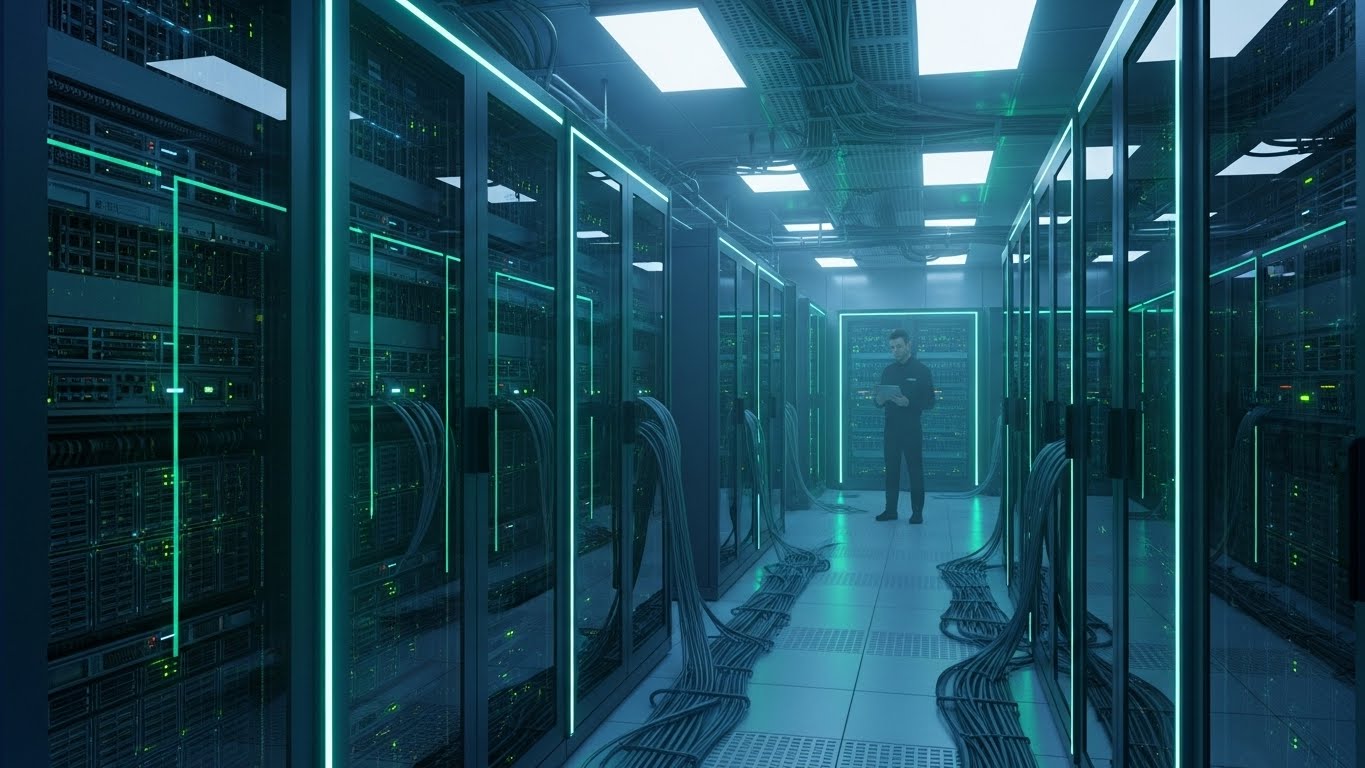
Sustainability also extends to digital practices. Data centers, which power the Internet, consume vast amounts of energy. Tech companies are investing in carbon-neutral operations, optimizing cooling systems, and using renewable energy to power their infrastructure.
The future of technology must be green — not just for the planet’s sake, but for humanity’s survival.
The Ethical Dimension of Technology
Every technological revolution brings ethical challenges. As machines grow smarter and data grows larger, questions of morality, privacy, and human rights become central.
Who owns the data we generate? Should AI have autonomy in decision-making? Can technology ever be truly unbiased?
Ethics in technology is no longer optional — it’s essential. Developers, policymakers, and users all share responsibility in shaping technology that benefits humanity rather than exploiting it.
Transparency, accountability, and inclusivity must guide innovation. Technology should serve as a force for equality, not division. It should empower individuals, not manipulate them.
Only through ethical awareness can we ensure that progress remains aligned with humanity’s best interests.
Conclusion: The Human Spirit Behind the Machine
Technology is not merely a collection of devices and algorithms — it’s a reflection of the human spirit. Every innovation begins with curiosity, imagination, and the desire to solve problems.
From the steam engine to quantum computing, the story of technology is the story of human evolution. We’ve built tools to survive, machines to produce, and now intelligence to think alongside us.
The future of technology will not be defined by how advanced our machines become, but by how wisely we use them. Progress is inevitable, but direction is a choice.
The world of tomorrow will be shaped not by the power of technology alone, but by the values that guide it. If we remember that technology exists to serve humanity — not the other way around — then the future will be bright, innovative, and profoundly human.