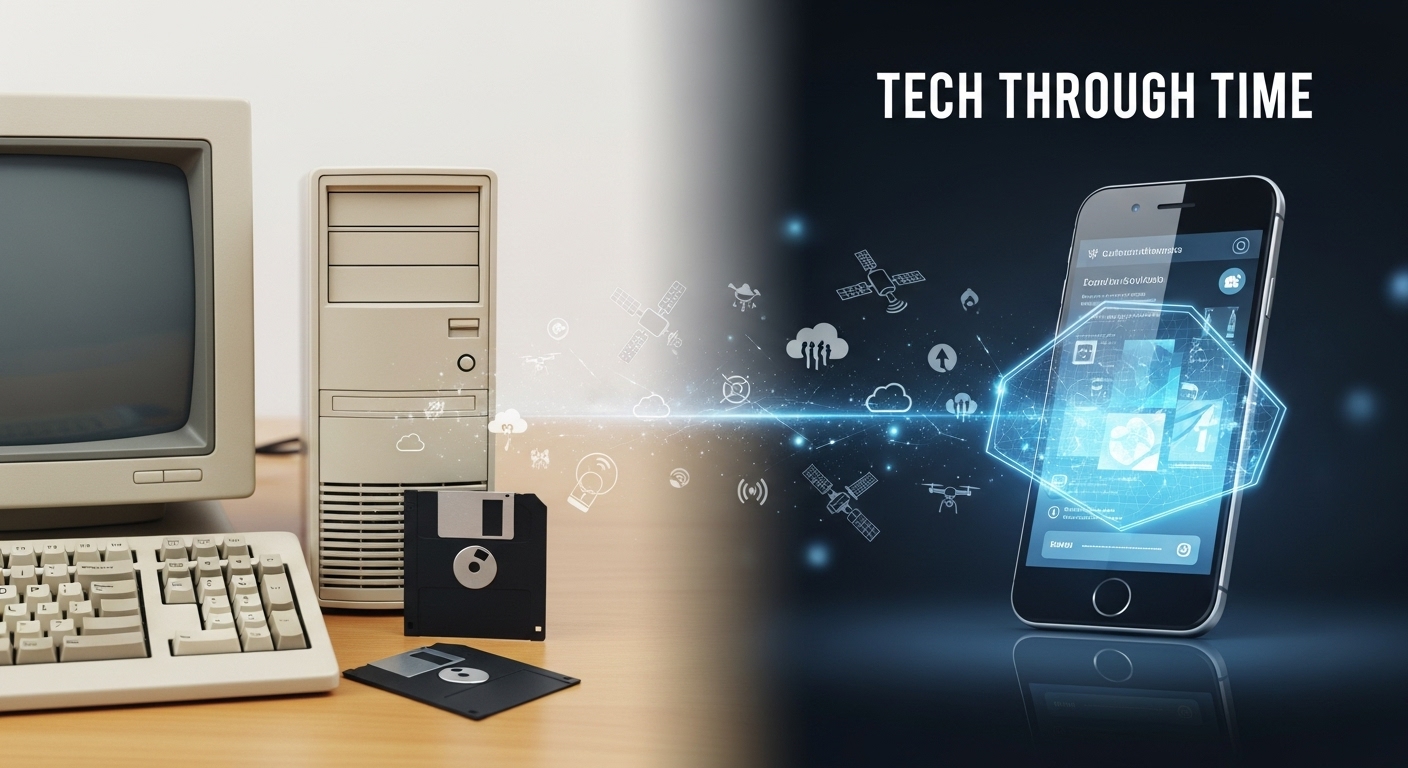

Technology has evolved from simple tools to complex systems that influence every aspect of human life. From communication and transportation to education and healthcare, technology has reshaped how societies function, how economies operate, and how individuals interact with the world. Its development has been rapid and continuous, accelerating exponentially in the past few decades, making it a cornerstone of modern civilization. Understanding the history, current trends, and future trajectory of technology allows us to appreciate its impact and anticipate how it will continue to transform the world.
The Historical Evolution of Technology
The story of technology begins with early human innovations, such as the invention of the wheel, the development of tools for agriculture, and the use of fire for cooking and protection. These early technologies enhanced human survival and enabled the development of civilizations. Over centuries, technological advancement became more structured, with societies applying systematic approaches to problem-solving and production.
The Industrial Revolution marked a major turning point in technological history. Steam engines, mechanized looms, and the growth of factory systems revolutionized manufacturing and transportation. Urbanization accelerated as people moved to cities for industrial work, and communication technologies such as the telegraph allowed rapid information exchange across long distances. This period laid the foundation for modern industrial and digital technologies.
The Rise of Computing
The 20th century introduced computing technology, which fundamentally changed the way humans process information. Early mechanical calculators and electronic computers like ENIAC were initially used for scientific research, military applications, and large-scale calculations. The theoretical contributions of pioneers such as Alan Turing, John von Neumann, and Grace Hopper established the principles of computer science, programming, and computational logic.
The advent of personal computers in the 1970s and 1980s brought computing into homes and small businesses. Devices like the Apple II, IBM PC, and Commodore 64 democratized access to computing power, enabling users to create, communicate, and solve problems efficiently. Personal computers became a platform for innovation in productivity software, entertainment, and education.
The Internet and Global Connectivity
The invention and proliferation of the internet transformed technology from isolated systems to a globally connected network. Originally developed for military and academic purposes, the internet expanded to commercial and public use in the 1990s. It revolutionized communication, commerce, education, and entertainment by providing instant access to information and connecting people worldwide.
Email, instant messaging, and web browsers changed the way individuals interact and businesses operate. Online platforms enabled e-commerce, with companies like Amazon redefining retail. Social media platforms allowed users to share experiences, collaborate, and influence culture on a global scale. The internet also facilitated remote work and education, making technology a critical enabler of daily life.
Mobile Technology and the Digital Revolution
The 21st century brought the mobile revolution, making computing portable and accessible anywhere. Smartphones, tablets, and wireless connectivity integrated communication, entertainment, navigation, and productivity into single devices. Applications transformed industries, from ride-sharing services to digital banking and telemedicine.
Mobile technology also influenced social behavior, creating real-time communication networks and enabling instant access to news, information, and entertainment. Social media became mobile-first, allowing users to interact and share content from virtually anywhere. This shift made technology more personal, integrated, and pervasive.
Artificial Intelligence and Machine Learning
Artificial intelligence has emerged as one of the most transformative areas of modern technology. AI systems can analyze vast datasets, identify patterns, and make decisions with increasing accuracy. Machine learning algorithms allow systems to improve over time, enhancing their efficiency and adaptability.
Applications of AI span multiple sectors. In healthcare, AI aids in diagnostics, drug discovery, and personalized treatment plans. In finance, it supports fraud detection, risk management, and algorithmic trading. AI-powered assistants and chatbots facilitate customer service, while autonomous vehicles and drones demonstrate the potential for AI-driven automation in transportation and logistics.
Internet of Things and Smart Technology
The Internet of Things connects physical devices to digital networks, allowing them to communicate, collect data, and perform automated functions. Smart homes, wearable devices, and connected industrial systems enhance convenience, safety, and productivity. Sensors and data analytics optimize energy use, monitor health, and improve operational efficiency in industries.
IoT technology transforms cities and industries into intelligent systems. Smart cities integrate traffic management, energy optimization, and public safety technologies to enhance quality of life. In agriculture, IoT enables precision farming, reducing waste and increasing yields. The proliferation of connected devices emphasizes data-driven decision-making and operational intelligence.
Robotics and Automation
Robotics integrates mechanical engineering, artificial intelligence, and sensor technologies to create machines capable of performing complex tasks. Industrial robots improve manufacturing efficiency, precision, and safety. In healthcare, surgical robots assist in minimally invasive procedures, improving outcomes and reducing recovery times.
Service robots, including delivery drones and cleaning systems, are increasingly integrated into daily life. Automation powered by robotics enhances productivity, reduces human error, and transforms labor-intensive processes. As technology advances, robotics continues to expand its influence in multiple domains, including exploration, healthcare, and domestic environments.
Virtual Reality and Augmented Reality
Virtual reality and augmented reality are reshaping how humans interact with digital environments. VR immerses users in entirely virtual spaces, enabling interactive experiences for gaming, simulation, education, and professional training. AR overlays digital content onto the physical world, enhancing navigation, learning, and creativity.
These technologies are applied across industries, from immersive learning environments in education to realistic training simulations in medicine and aviation. Entertainment, tourism, and marketing also leverage VR and AR for interactive and engaging experiences. These innovations demonstrate the potential of technology to create entirely new forms of human interaction and perception.
Renewable Energy and Environmental Technology
Technological innovation plays a crucial role in sustainability. Renewable energy systems, such as solar panels, wind turbines, and energy storage solutions, reduce reliance on fossil fuels and mitigate climate change. Smart grids and energy-efficient devices optimize consumption, enhancing environmental responsibility.
Technologies for environmental monitoring, including satellite imaging, sensors, and data analytics, provide critical insights into climate patterns, resource management, and disaster prevention. Innovation in this sector highlights how technology can address global challenges while fostering economic growth and societal well-being.
Biotechnology and Healthcare Advancements
Biotechnology and healthcare technologies are revolutionizing medicine. Genetic engineering, personalized medicine, and CRISPR technology enable targeted interventions in disease prevention and treatment. Medical imaging, robotic surgery, and AI-assisted diagnostics improve accuracy, efficiency, and patient outcomes.
Wearable devices and telehealth solutions allow continuous health monitoring and remote care, expanding access and convenience. Biotechnology integrates biological knowledge with engineering and computing, demonstrating technology’s capacity to enhance human health and longevity.
Technology in Education
Technology has transformed education by providing access to information, interactive learning tools, and global collaboration. Online platforms, virtual classrooms, and adaptive learning software allow personalized learning experiences tailored to individual needs.
Gamification, simulations, and VR experiences enhance engagement and retention. Technology connects students, teachers, and educational resources across the globe, democratizing access and fostering lifelong learning. Educational technology equips individuals with the skills needed to navigate a rapidly changing digital landscape.
Ethical and Social Implications
While technology offers enormous benefits, it also presents ethical and social challenges. Data privacy, cybersecurity, algorithmic bias, and digital addiction require careful consideration. Rapid innovation often outpaces regulation, necessitating proactive governance and responsible development.
Automation and AI may disrupt labor markets, requiring reskilling and adaptation. Equitable access to technology is critical to preventing digital divides and fostering inclusive growth. Addressing these challenges ensures that technological progress benefits society as a whole.
Emerging Technologies and Future Trends
The future of technology promises continued innovation in areas such as quantum computing, advanced AI, biotechnology, renewable energy, and space exploration. Quantum computing offers the potential for unprecedented computational power, enabling breakthroughs in medicine, material science, and cryptography.
Emerging technologies like 5G connectivity, edge computing, and brain-computer interfaces will further enhance communication, data processing, and human-computer interaction. Technology will continue to integrate into daily life, transforming industries, culture, and society while presenting new opportunities and challenges.
The Impact of Technology on Society
Technology has profoundly influenced human society. It has transformed economies, enabled global communication, and facilitated cultural exchange. Digital platforms connect billions of people, creating global communities and enabling collaborative innovation.
From healthcare and education to entertainment and business, technology shapes how people live, learn, and work. It fosters creativity, problem-solving, and innovation while challenging traditional social and economic structures. Technology’s pervasive influence underscores its role as a defining feature of the modern era.
Conclusion
Technology has evolved from simple tools to complex, interconnected systems that shape every aspect of human life. Its impact spans communication, healthcare, education, industry, and culture, transforming societies and economies worldwide. Emerging technologies promise to further revolutionize daily life, offering opportunities for innovation, efficiency, and human advancement.
While technology brings remarkable benefits, it also raises ethical, social, and economic challenges that require thoughtful consideration. Responsible development, equitable access, and proactive governance are essential to ensure that technology continues to serve humanity positively.
Ultimately, technology is not merely a collection of tools—it is a dynamic force that defines the modern world. It empowers, connects, and transforms, shaping the present and paving the way for a future limited only by imagination and human ingenuity.