
Introduction
In the twenty-first century, technology has quietly become the backbone of modern civilization. Every innovation, from the smartphone in our hands to the artificial intelligence systems guiding industries, is part of a silent revolution reshaping the human experience. Technology influences every sphere of life—education, health, communication, business, and entertainment—bringing the world closer while redefining what it means to live, work, and connect. The modern world thrives on data, automation, and intelligence, all powered by continuous technological evolution. This blog explores how technology has transformed human life, its advantages, challenges, and the promising future it continues to build for generations to come.
The Evolution of Technology
The story of technology is a story of human progress. From the invention of the wheel to the creation of the internet, each innovation has marked a milestone in civilization. The industrial revolution introduced machines that multiplied human productivity, while the digital revolution introduced computers that multiplied human intelligence. Today, we live in the age of automation and artificial intelligence, where machines are capable of performing complex tasks that once required human minds.
Technology has evolved faster in the past five decades than in all of human history. Early computers filled entire rooms and could perform only basic calculations. Now, smartphones in our pockets have more computing power than the machines that landed humans on the moon. The journey from mechanical invention to digital transformation showcases humanity’s constant desire to make life faster, smarter, and more efficient.
The Power of Artificial Intelligence
Artificial intelligence, or AI, stands at the core of modern technological advancement. It allows machines to learn, adapt, and make decisions, simulating human intelligence in astonishing ways. AI is no longer a futuristic idea—it is a present reality driving innovation across industries. From digital assistants that respond to our voice commands to self-driving cars navigating roads, AI is shaping daily life in ways both visible and invisible.
In healthcare, AI helps doctors detect diseases early by analyzing medical images more accurately than traditional methods. In business, AI algorithms predict customer behavior and automate tasks, boosting efficiency. Even in entertainment, AI curates personalized recommendations for movies, music, and games. However, as AI continues to evolve, ethical questions arise. How do we ensure machines act responsibly? How do we protect jobs and privacy in a world dominated by automation? These challenges highlight the importance of balancing innovation with human values.
The Internet of Things: A Connected World
The Internet of Things, or IoT, is another technological marvel transforming the modern era. It refers to the network of devices—phones, appliances, vehicles, and even buildings—that communicate and share data with one another. IoT has turned everyday objects into smart systems capable of making life more convenient and efficient.
Smart homes, for example, allow users to control lighting, temperature, and security with a single command. In agriculture, IoT devices monitor soil moisture and crop health, helping farmers increase productivity while conserving resources. In cities, IoT-based infrastructure manages traffic flow, reduces energy waste, and improves public safety.
However, the rise of IoT also raises concerns about cybersecurity and privacy. As more devices collect and transmit data, the risk of unauthorized access grows. Ensuring secure connections and responsible data management remains essential for the sustainable growth of connected technology.
Cloud Computing: The Digital Foundation
Cloud computing is the invisible engine driving much of today’s technology. It enables data storage and computing power to be accessed remotely through the internet rather than relying solely on physical hardware. Businesses, governments, and individuals now depend on cloud services for everything from document storage to artificial intelligence applications.
The cloud allows companies to scale operations quickly and cost-effectively. It enables global collaboration, as teams can share files and work together in real-time regardless of location. For individuals, cloud storage keeps photos, videos, and important documents safe and accessible from any device.
The impact of cloud computing extends beyond convenience—it has redefined the global economy. Startups that once needed expensive hardware now thrive using affordable cloud-based services. The cloud has also made advanced technologies like AI and big data analytics accessible to organizations of all sizes, fueling innovation and creativity worldwide.
Big Data and Decision-Making
Every action in the digital world leaves behind data, creating a vast ocean of information known as big data. This data is the fuel powering decision-making across industries. Companies analyze consumer behavior, governments plan policies, and healthcare professionals predict outbreaks—all through data-driven insights.
Big data allows organizations to understand trends, anticipate challenges, and develop more effective strategies. For instance, retailers use data to predict customer preferences, while financial institutions use it to detect fraud. Even in sports, data analytics is used to enhance performance and strategy.
However, the immense power of data comes with great responsibility. Protecting personal information and preventing misuse are major challenges. Ethical data practices and transparent policies are essential to maintaining public trust in the digital age.
Communication in the Digital Era
Technology has completely redefined communication. What once took days through letters now happens in seconds through instant messaging and video calls. The digital revolution has transformed the world into a global village, connecting people regardless of distance or language.
Social media platforms have become the new centers of communication, creativity, and community. They allow people to share ideas, promote businesses, and engage with global audiences. In the corporate world, digital communication tools have streamlined operations, allowing remote work to thrive and collaboration to flourish.
Yet, this connectivity comes with challenges. The overuse of social media can lead to information overload and reduced face-to-face interaction. Misinformation spreads quickly, blurring the lines between truth and opinion. Finding balance in digital communication is vital to preserving both mental health and meaningful human connection.
Technology in Education
Education has undergone a major transformation thanks to technology. Traditional classrooms have evolved into hybrid learning environments where digital tools complement physical teaching. Students can now access knowledge beyond textbooks through online courses, digital libraries, and interactive simulations.
Virtual reality and augmented reality are making learning more immersive. Subjects like history and science come alive as students explore virtual environments and interactive lessons. Artificial intelligence personalizes education, helping teachers identify individual strengths and weaknesses to create tailored learning experiences.
However, the digital divide remains a major concern. Not all students have equal access to technology or the internet, especially in developing regions. Bridging this gap is crucial to ensuring that education remains inclusive and equitable for all.
Technology in Healthcare
Technology has revolutionized healthcare in ways that were once unimaginable. From robotic surgeries to telemedicine, innovation has improved diagnosis, treatment, and patient care. Medical devices can now monitor heart rates, blood pressure, and glucose levels in real-time, giving doctors valuable insights into patient health.
Artificial intelligence is playing a vital role in early disease detection, while wearable technology encourages preventive care by promoting healthy lifestyles. Telehealth platforms connect doctors and patients remotely, making healthcare more accessible to those in remote or underserved areas.
Moreover, biotechnology and genetic engineering are opening new frontiers in personalized medicine. Treatments can now be tailored to individual patients based on their genetic profiles. The fusion of technology and healthcare continues to save lives and extend the boundaries of medical science.
The Economic Impact of Technology
Technology is not only changing how we live—it is transforming how we work. The global economy is now driven by digital innovation, automation, and data. Jobs that once required manual effort are now supported or replaced by intelligent systems. While this increases productivity, it also challenges the traditional workforce.
Automation and robotics are revolutionizing manufacturing, logistics, and services. At the same time, the rise of the gig economy allows people to work flexibly using digital platforms. New industries are emerging around cybersecurity, data science, and renewable energy, creating opportunities for the next generation of workers.
However, technological progress must be accompanied by continuous skill development. Education systems must prepare individuals for jobs that require creativity, critical thinking, and digital literacy. The future of work depends on our ability to adapt to a rapidly evolving technological landscape.
Technology and Sustainability
As the world faces growing environmental challenges, technology is becoming a crucial ally in sustainability efforts. Green technology, renewable energy, and digital solutions are helping reduce waste, conserve resources, and combat climate change.
Electric vehicles are reducing carbon emissions, while smart grids optimize energy use. In agriculture, precision farming uses technology to improve crop yield while minimizing environmental impact. Recycling systems and waste management have become more efficient through automation and data analysis.
The combination of technology and environmental responsibility is key to building a sustainable future. Innovation should focus not only on progress but also on preserving the planet for generations to come.
Challenges of the Technological Era
While technology has brought immense benefits, it has also created new challenges. Cybersecurity threats, data breaches, and digital addiction are major concerns. The constant exposure to screens affects mental health, while overreliance on machines can reduce human creativity and empathy.
Furthermore, the rapid pace of technological advancement can lead to inequality. Those without access to technology are left behind, widening the gap between developed and developing regions. To ensure that technology benefits everyone, policies must focus on inclusivity, ethics, and digital education.
The Future of Technology
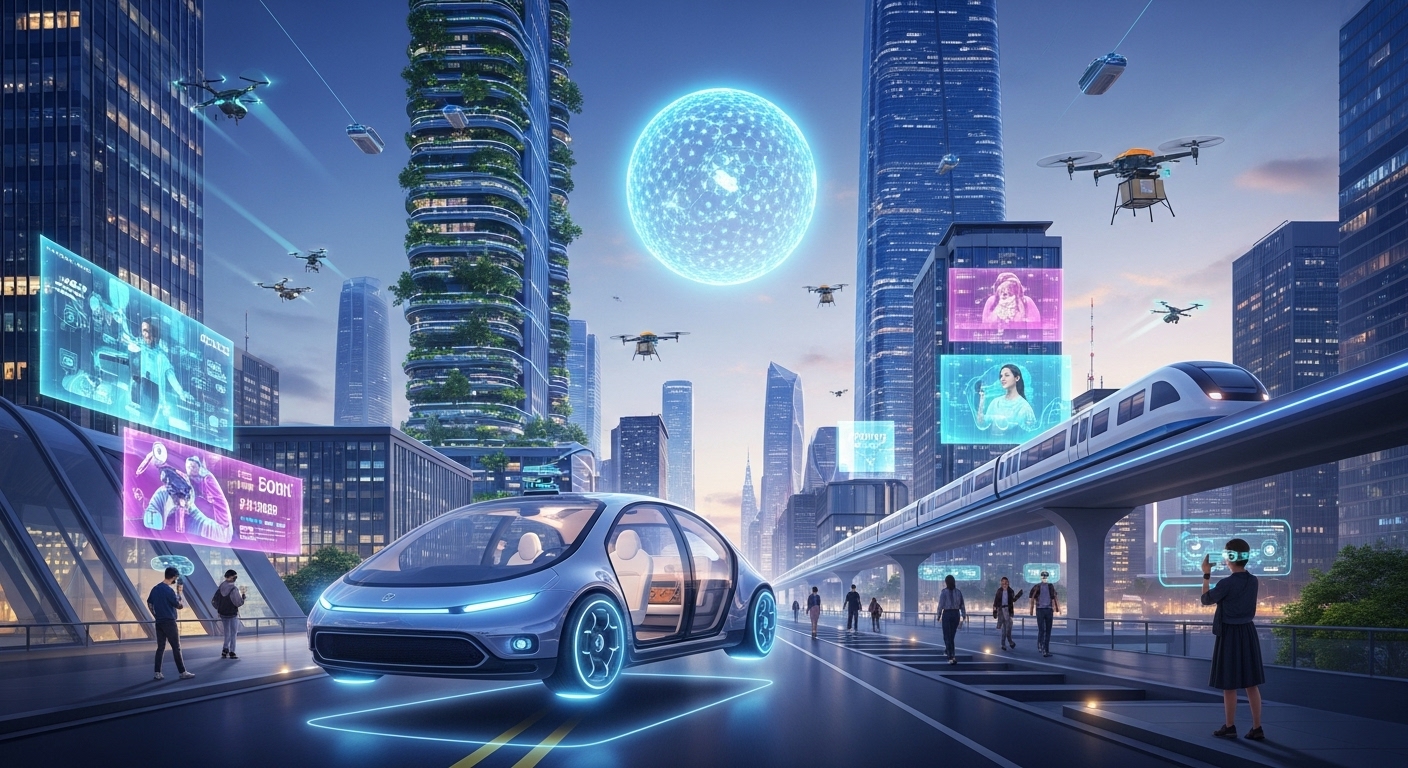
The future of technology promises even greater transformation. Artificial intelligence, quantum computing, biotechnology, and space exploration will shape the next phase of human progress. Smart cities will operate with precision, self-driving cars will dominate roads, and digital healthcare will become universal.
The line between the physical and digital worlds will blur further through virtual and augmented reality. However, the essence of progress lies in responsible innovation. The technology of the future must prioritize humanity, sustainability, and equality.
Conclusion
Technology is the greatest force driving human progress today. It has redefined how we live, learn, and connect, making the impossible possible. Yet, as we move deeper into the digital era, it is essential to remember that technology is a tool, not a replacement for human values. The future depends on how we choose to use it—wisely, ethically, and inclusively.
In this silent revolution, every click, code, and connection shapes tomorrow’s world. The power of technology lies not only in its machines but in its ability to amplify human potential. The challenge ahead is not to control technology, but to guide it toward a better, smarter, and more compassionate future for all.