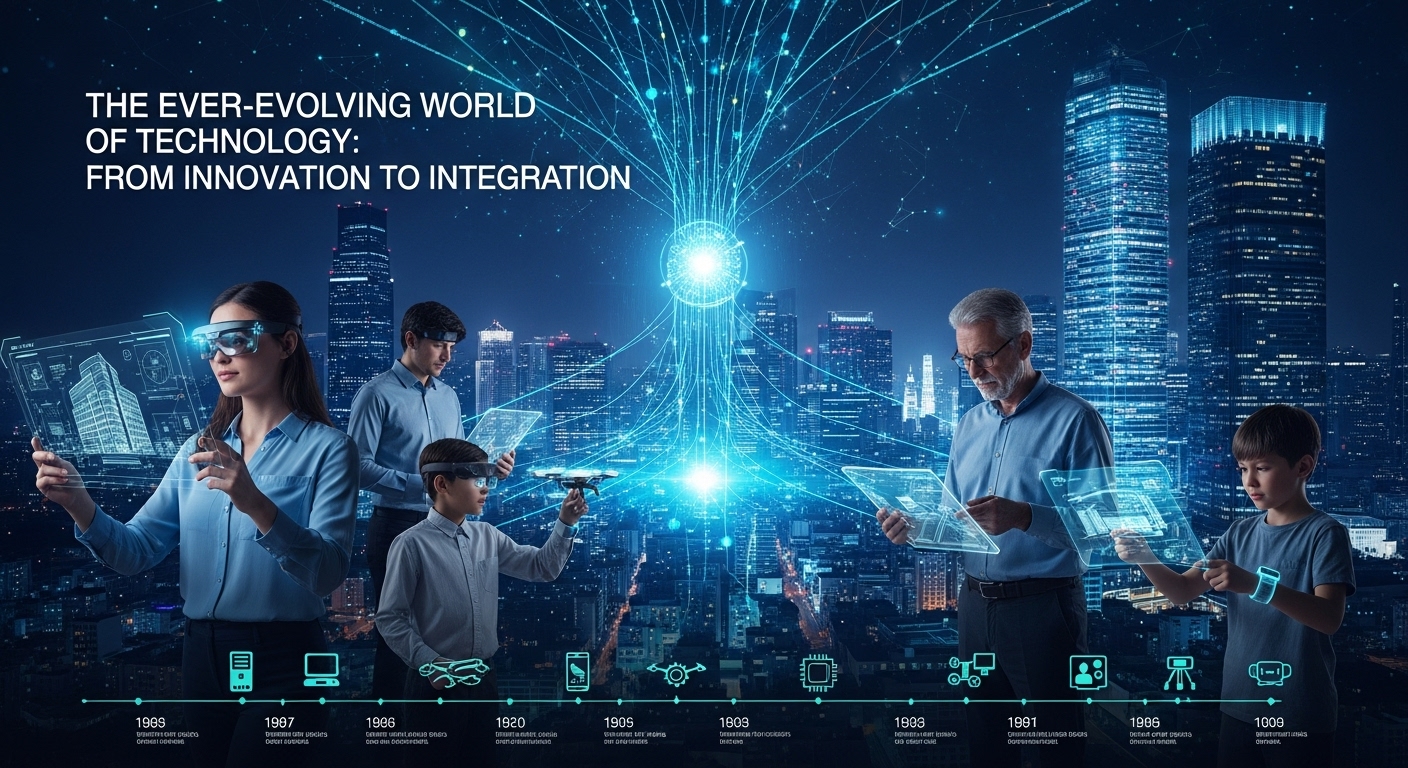

In the blink of an eye, technology has evolved from a novelty to an essential part of our everyday lives. The world we live in today is vastly different from the world just a few decades ago, thanks to rapid advancements in technology. From smartphones and artificial intelligence to autonomous vehicles and blockchain, these innovations are not only reshaping how we work but also how we interact, think, and live. But what exactly does the future hold for technology? How will it continue to transform the world as we know it? In this blog post, we will explore the ongoing and emerging trends in technology, their impact on various industries, and how these developments are paving the way for a new era.
The Digital Transformation of Society
The digital transformation is perhaps the most defining characteristic of the modern technological age. The widespread adoption of digital tools and platforms has affected almost every aspect of human life. Businesses are moving to digital-first models, governments are adopting digital governance, and individuals are increasingly relying on technology to manage their lives. From the way we work to the way we communicate, digital technology has permeated every facet of society.
One of the most significant drivers of this transformation is the cloud computing revolution. Cloud technology has made it possible for organizations to store, process, and manage vast amounts of data remotely. No longer confined to expensive, on-site servers, businesses now have access to scalable infrastructure that can adapt to their needs. This shift has empowered companies to innovate faster, collaborate more efficiently, and deliver services that would have been impossible just a few years ago.
At the same time, consumers are also experiencing a transformation in how they interact with technology. The rise of smart devices—from smartphones to smart TVs, home assistants, and wearable fitness trackers—has made it easier than ever for people to stay connected, informed, and entertained. These devices have become part of the fabric of daily life, providing us with instant access to information, entertainment, and communication platforms.
However, the shift to a fully digital world also comes with challenges. The increased reliance on digital technologies raises important concerns about data privacy and cybersecurity. As more and more personal and financial information is stored online, the risks of data breaches and cyberattacks continue to grow. This underscores the need for robust security protocols and greater awareness about how our data is being collected, stored, and used.
Artificial Intelligence: The Brain of Future Technology
Artificial intelligence (AI) is one of the most talked-about technologies today, and for good reason. AI refers to machines that are capable of performing tasks that typically require human intelligence. These tasks include learning, reasoning, problem-solving, and decision-making. The potential applications of AI are limitless, and its impact is already being felt across multiple industries.
In healthcare, for example, AI-powered tools are revolutionizing diagnosis and treatment. Machine learning algorithms can analyze medical data, such as X-rays and MRI scans, to identify patterns that might be missed by human doctors. AI is also being used to predict patient outcomes, recommend treatment plans, and even develop personalized medicines. With the potential to reduce human error and increase the speed and accuracy of diagnosis, AI is poised to make healthcare more efficient and effective.
In the business world, AI is transforming customer service, marketing, and even hiring processes. Chatbots powered by AI are handling customer queries 24/7, providing real-time support and freeing up human agents for more complex tasks. Machine learning algorithms are analyzing consumer behavior to offer personalized recommendations and targeted advertisements. In human resources, AI is being used to screen resumes and evaluate candidates, improving hiring decisions and reducing bias.
Perhaps the most futuristic application of AI is in the development of autonomous vehicles. Self-driving cars, trucks, and drones are equipped with AI systems that can interpret sensor data, recognize objects, and make decisions in real-time. These vehicles have the potential to revolutionize transportation, reducing accidents, cutting down on traffic congestion, and improving fuel efficiency. While there are still regulatory and technical hurdles to overcome, the AI-driven future of transportation is on the horizon.
Despite its promise, AI is not without its challenges. Ethical concerns about AI bias, job displacement, and privacy are top of mind for many experts. AI systems are only as good as the data they are trained on, and if that data is biased, the decisions made by AI algorithms can perpetuate inequality. There is also the concern that as AI becomes more advanced, it could replace human workers in many industries, creating a need for new approaches to education, reskilling, and workforce adaptation.
Robotics: Machines That Will Redefine Our Work
Robotics, another rapidly advancing technology, is making its way into industries ranging from manufacturing and healthcare to retail and even agriculture. Robots are increasingly being used to perform tasks that are dangerous, repetitive, or require high precision, freeing humans to focus on more creative or strategic endeavors.
In manufacturing, robots have been used for decades to assemble products, weld parts, and handle materials. These robots improve efficiency, reduce human error, and ensure a high degree of precision. Today’s robots are even more advanced, with some capable of adapting to changes in production lines, learning new tasks, and collaborating with human workers in real-time.
In healthcare, surgical robots have revolutionized minimally invasive procedures. These robots offer enhanced precision and control, allowing surgeons to perform complex operations with fewer incisions and faster recovery times for patients. In rehabilitation, robotic exoskeletons are helping people with mobility impairments regain the ability to walk, while robotic prosthetics are becoming more advanced and lifelike.
The impact of robotics is not limited to industry and healthcare. In the consumer space, robots are entering our homes as well. Service robots, like robotic vacuum cleaners, delivery drones, and even personal assistant robots, are increasingly becoming part of everyday life. These robots handle routine tasks, saving time and improving convenience.
However, the rise of robotics also raises questions about job displacement. As robots take over more tasks, many fear that human workers will be replaced, particularly in industries that rely on repetitive or manual labor. While robots can undoubtedly increase productivity and improve efficiency, society will need to find ways to address the changing nature of work and ensure that displaced workers can transition into new roles.
Blockchain: A New Era of Secure and Transparent Transactions
Blockchain technology is another game-changer that promises to revolutionize industries from finance to supply chain management. At its core, blockchain is a decentralized ledger system that allows data to be securely stored across multiple computers. This creates a transparent, tamper-proof record of transactions that can be accessed by anyone in the network.
The most well-known application of blockchain is in cryptocurrencies, such as Bitcoin and Ethereum. These digital currencies use blockchain to provide secure, peer-to-peer transactions without the need for traditional financial intermediaries like banks. Cryptocurrencies have gained significant attention for their potential to disrupt the financial system by offering a decentralized, borderless alternative to traditional currencies.
Beyond cryptocurrencies, blockchain is also being used in supply chain management, real estate, healthcare, and even voting systems. In supply chains, blockchain can be used to track the provenance of products, ensuring that goods are ethically sourced and not counterfeit. In healthcare, blockchain can help securely store and share medical records, improving patient care and privacy. In real estate, blockchain can streamline property transactions and reduce fraud by providing a secure and transparent record of ownership.
Despite its potential, blockchain faces challenges in terms of scalability and regulation. Blockchain networks can be slow and resource-intensive, and the regulatory environment surrounding cryptocurrencies and blockchain technology remains uncertain in many countries. As the technology continues to evolve, it will be crucial to address these challenges and find ways to make blockchain more efficient and accessible.
The Internet of Things: A World That’s More Connected
The Internet of Things (IoT) refers to the network of interconnected devices that communicate with each other over the internet. From smart home devices, such as thermostats, lights, and security cameras, to wearables like fitness trackers and connected cars, IoT is rapidly changing the way we live and work.
In smart homes, IoT devices are making life more convenient by allowing users to control their homes remotely. Smart thermostats can learn your preferences and adjust the temperature automatically, while smart lights can be controlled with a simple voice command. IoT-enabled security cameras can send alerts to your phone if they detect unusual activity, providing greater peace of mind.
In industries like manufacturing and logistics, IoT is improving efficiency and productivity. Sensors can track the location and condition of goods in real-time, enabling businesses to optimize inventory and reduce waste. In healthcare, wearable devices can monitor vital signs like heart rate and blood pressure, providing doctors with real-time data and improving patient outcomes.
While IoT promises to make our world more connected and efficient, it also raises concerns about privacy and security. As more devices are connected to the internet, the potential for cyberattacks increases. Ensuring that IoT devices are secure and that personal data is protected will be crucial as the number of connected devices continues to grow.
The Road Ahead: What Does the Future Hold for Technology?
The pace of technological innovation is faster than ever before, and the possibilities for the future are endless. From quantum computing and 5G networks to advancements in biotechnology and virtual reality, we are only beginning to scratch the surface of what’s possible. As technology continues to evolve, it will undoubtedly bring new challenges, but it will also offer unprecedented opportunities for growth, creativity, and problem-solving.
However, with these opportunities come important ethical considerations. As technologies like AI, robotics, and blockchain become more integrated into society, we must ensure that they are developed and used responsibly. This means addressing issues like privacy, bias, and job displacement