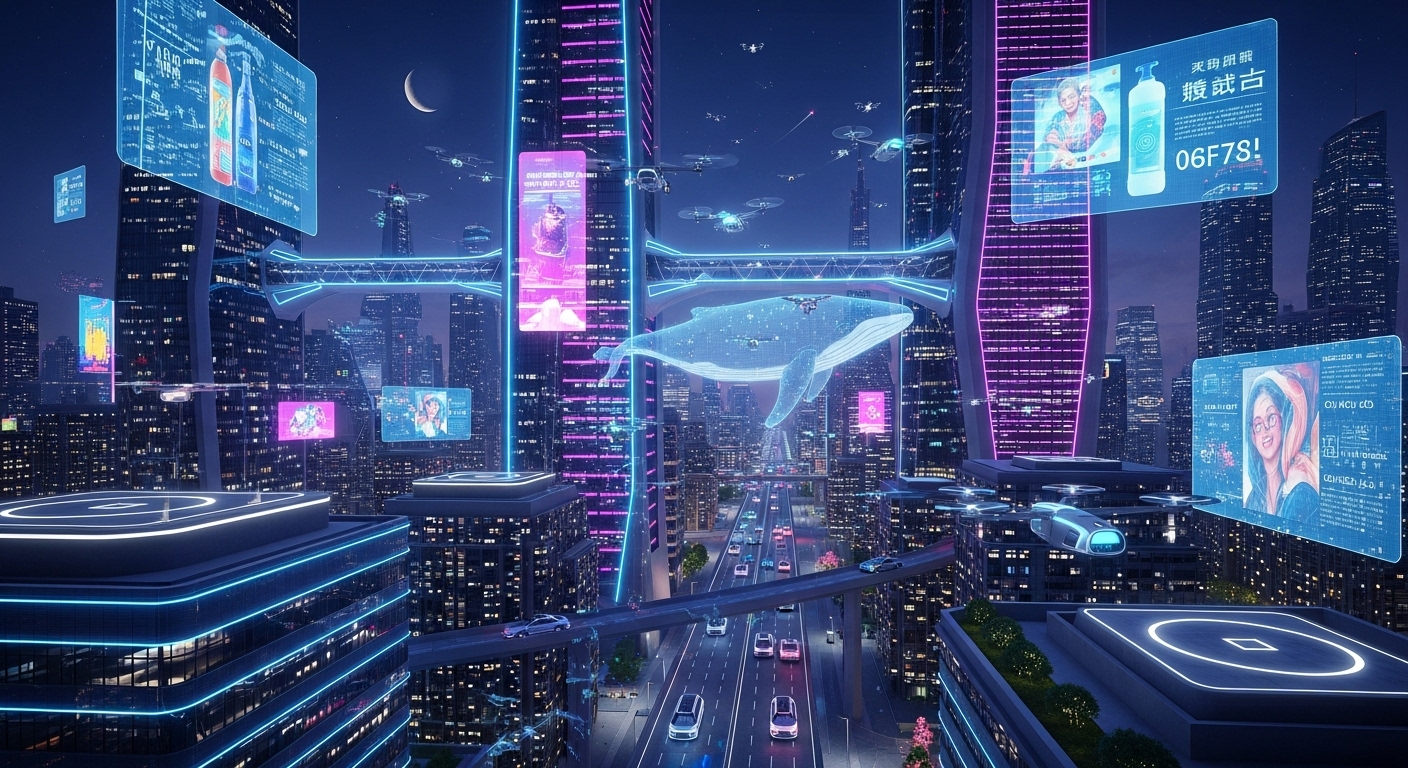

The world of technology is advancing at an unprecedented rate. From artificial intelligence to quantum computing, innovations are reshaping industries, everyday life, and how we interact with the world around us. This blog post explores five groundbreaking technological advancements that are expected to define the future. These innovations not only promise to revolutionize our daily lives but also challenge the boundaries of what we think is possible. Let’s dive into the world of tomorrow and see what the future holds.
1. Artificial Intelligence: Beyond Automation
Artificial Intelligence (AI) is perhaps the most talked-about technology in recent years. AI is already integrated into our lives in various ways, from virtual assistants like Siri and Alexa to personalized recommendations on Netflix and YouTube. However, the future of AI holds even greater potential, transcending automation and data processing to become a transformative force in nearly every sector.
In the near future, AI is expected to evolve beyond simple task automation into more advanced capabilities like general artificial intelligence (AGI). AGI refers to machines that can perform any intellectual task that a human can do. This could mean AI systems capable of making complex decisions, reasoning, and even exhibiting emotions and empathy.
AI’s potential to improve healthcare, education, and customer service is immense. For instance, AI-powered diagnostic tools can analyze medical data faster and more accurately than human doctors, potentially leading to earlier detection of diseases like cancer. In education, AI could offer personalized learning experiences, adapting to the pace and preferences of each student. Customer service chatbots will continue to evolve, offering more natural and efficient interactions with users.
However, this shift also raises important questions about ethics, privacy, and job displacement. As AI becomes more capable, there will be a need for new regulations and frameworks to ensure its responsible development and use.
2. Quantum Computing: The Next Frontier in Processing Power
Quantum computing is another revolutionary technology that promises to redefine the limits of computational power. Unlike traditional computers, which use bits to represent data in binary (0s and 1s), quantum computers use qubits, which can represent and store data in multiple states simultaneously. This property, known as superposition, allows quantum computers to process enormous amounts of data in parallel, solving complex problems much faster than classical computers.
Quantum computing has the potential to revolutionize several industries, including cryptography, drug discovery, and material science. In cryptography, quantum computers could break current encryption methods, rendering traditional security protocols obsolete. However, this challenge also opens the door to the development of quantum-resistant encryption methods.
In the field of healthcare, quantum computing could help scientists simulate the behavior of molecules and proteins, accelerating the discovery of new drugs and treatments. In material science, it could lead to the development of new materials with unprecedented properties, opening up possibilities for innovations in energy storage, electronics, and manufacturing.
While quantum computing is still in its infancy, major tech companies like Google, IBM, and Microsoft are making significant investments in quantum research. It may take several years before quantum computers become mainstream, but the technology is expected to have a profound impact on science and industry.
3. 5G and Beyond: The Future of Connectivity
The rollout of 5G networks is one of the most significant technological developments in recent years. 5G promises to deliver faster internet speeds, lower latency, and the ability to connect more devices simultaneously. This leap in connectivity will enable a wide range of innovations, from smart cities to autonomous vehicles, and will change the way we interact with the digital world.
One of the most exciting applications of 5G is the potential for the Internet of Things (IoT) to thrive. IoT refers to the network of connected devices that communicate with each other and share data. With 5G’s faster speeds and lower latency, IoT devices will become even more efficient and capable, allowing for real-time monitoring of everything from traffic patterns to personal health data.
Autonomous vehicles are another area where 5G will have a huge impact. Self-driving cars rely on real-time data from sensors, cameras, and other devices to navigate roads safely. With 5G, these vehicles will be able to communicate with each other and traffic infrastructure in real-time, reducing the risk of accidents and improving traffic flow.
5G will also enable new forms of entertainment and media, including augmented reality (AR) and virtual reality (VR). These technologies require high bandwidth and low latency to provide seamless experiences. As 5G networks become more widespread, we can expect to see a surge in AR and VR applications, from immersive gaming experiences to virtual tourism.
In the long term, the evolution of 5G will give rise to 6G and beyond, offering even faster speeds, more reliable connections, and new capabilities that we can only begin to imagine. The future of connectivity is exciting, and 5G is just the beginning.
4. Biotechnology: Merging Technology with Biology
Biotechnology is an area of research and development that combines biology and technology to create innovative solutions in medicine, agriculture, and environmental sustainability. The future of biotechnology holds tremendous promise, with advancements that could change the way we treat diseases, produce food, and interact with the environment.
One of the most exciting breakthroughs in biotechnology is gene editing, particularly through the use of CRISPR-Cas9 technology. CRISPR allows scientists to edit specific genes with unprecedented precision, enabling them to correct genetic defects or even enhance certain traits. In medicine, this could lead to cures for genetic disorders like cystic fibrosis or sickle cell anemia. In agriculture, gene editing could result in crops that are more resistant to diseases, pests, and extreme weather conditions.
Another area where biotechnology is making waves is in regenerative medicine. Stem cell research and tissue engineering hold the potential to regenerate damaged organs and tissues, offering new hope for patients with conditions like heart disease, spinal cord injuries, or degenerative diseases like Parkinson’s. The ability to grow organs in the lab or repair damaged tissues could revolutionize healthcare and dramatically increase life expectancy.
Biotechnology is also playing a significant role in sustainability. Bio-based materials and biofuels are being developed as alternatives to petroleum-based products, reducing our reliance on fossil fuels and decreasing environmental impact. Additionally, bioremediation techniques, which use microorganisms to clean up pollution, are being improved to help restore ecosystems damaged by industrial activity.
As biotechnology continues to advance, ethical questions surrounding gene editing, cloning, and the manipulation of life will become more pressing. It will be essential for governments, scientists, and the public to navigate these ethical dilemmas carefully, ensuring that the benefits of biotechnology are realized without causing harm.
5. Space Exploration: Expanding Humanity’s Reach
Space exploration has always captured the human imagination, but in recent years, it has moved from the realm of science fiction into reality. With private companies like SpaceX, Blue Origin, and Virgin Galactic leading the charge, the next frontier for humanity may be the stars.
Space exploration is poised to redefine our understanding of the universe and unlock new opportunities for scientific discovery. In the near future, missions to the Moon, Mars, and beyond could provide critical insights into the origins of life and the potential for human colonization of other planets.
One of the most exciting prospects in space exploration is the potential for asteroid mining. Asteroids contain valuable resources like rare metals and minerals, which could be used for manufacturing or even to sustain life on other planets. Space-based industries could also lead to new technologies that improve life on Earth, such as advanced solar power systems or water purification techniques.
The advent of commercial space travel also holds promise for tourism, with wealthy individuals able to take suborbital flights or even stay in space hotels. This could open up space to a new generation of explorers, scientists, and adventurers, driving further innovation in space technology.
While the technical challenges of space exploration are immense, the future of space travel looks bright. As technology improves and costs decrease, space could become more accessible to humanity than ever before.
Conclusion: Embracing the Future
The future of technology is both exciting and unpredictable. From AI and quantum computing to biotechnology and space exploration, the innovations we are witnessing today will shape the world of tomorrow. While these technologies promise to solve some of humanity’s greatest challenges, they also bring new ethical dilemmas and risks that must be addressed.
As we move forward, it will be crucial to strike a balance between innovation and responsibility. By fostering collaboration between governments, businesses, and the public, we can ensure that these technological advancements are used for the greater good, benefiting not just the privileged few but all of humanity. The future of tech is bright, and it is up to us to shape it in a way that is both sustainable and equitable.
The next few decades will undoubtedly see breakthroughs that we can hardly imagine today. However, one thing is clear: the technology of tomorrow will fundamentally change the way we live, work, and interact with the world around us. The future is now, and it is waiting for us to embrace it.