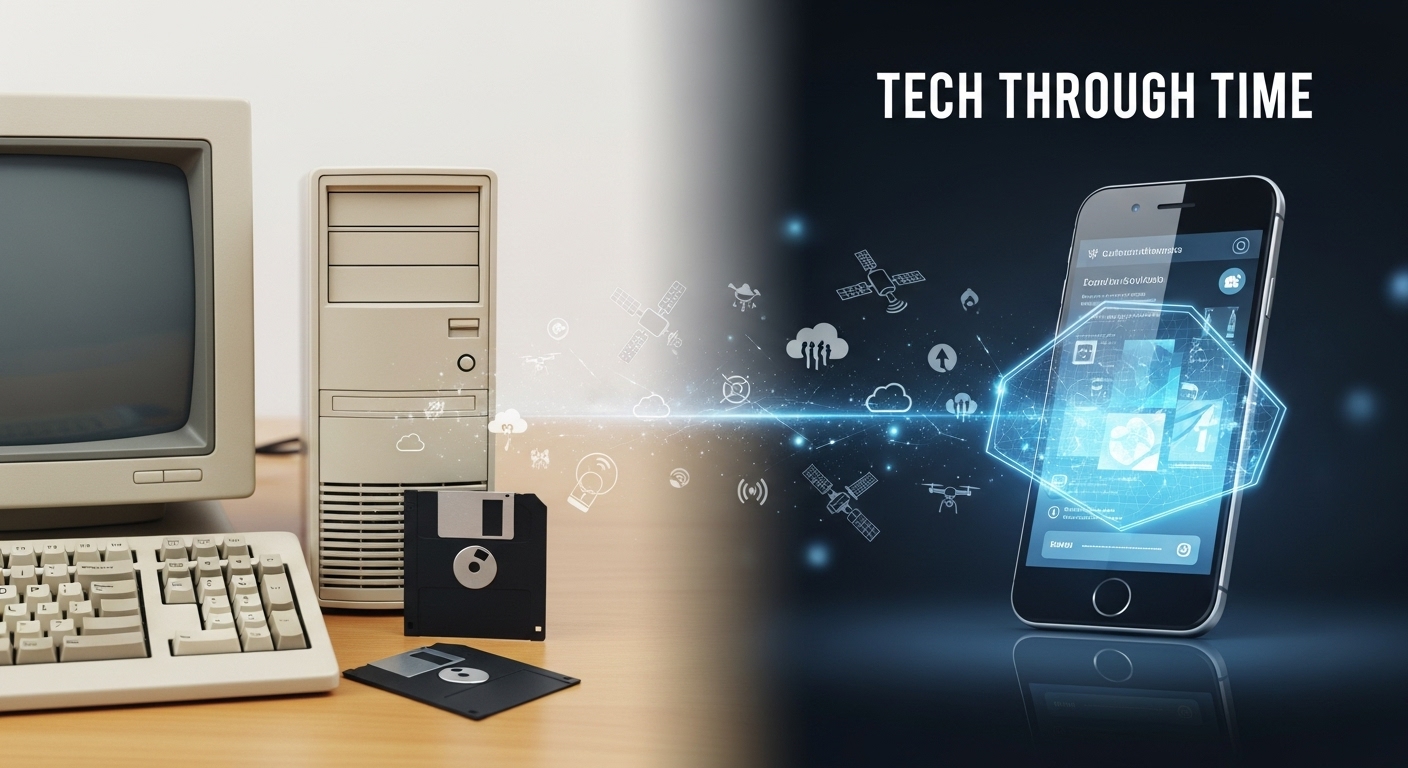

In the ever-evolving landscape of modern life, technology stands as the central force of change. Whether it’s the way we communicate, work, or live, technology is the silent architect behind the rapid transformation of nearly every industry. As we push the boundaries of what is possible, each new innovation comes with the promise of making our lives easier, more efficient, and interconnected. This blog explores the profound impact of technology on our world and examines the emerging trends that will shape the future.
The Digital Transformation: A New Era of Connectivity
The concept of digital transformation has gained significant traction in recent years, particularly as businesses and individuals transition to more tech-driven models. This shift involves the integration of digital technologies into everyday activities, altering how people engage with the world around them. From smartphones to cloud computing, the digital era has revolutionized everything, from communication and education to entertainment and commerce.
A prime example of this transformation is the growing reliance on cloud platforms. By moving data storage and processing to the cloud, organizations can access information and applications from virtually anywhere, enhancing collaboration and productivity. This has allowed businesses to scale rapidly, adapt to market changes, and streamline their operations. For individuals, cloud services enable seamless synchronization across devices, making life more convenient and efficient.
The future of connectivity will only deepen as the adoption of 5G networks accelerates. With faster speeds and greater bandwidth, 5G promises to enhance everything from virtual reality (VR) experiences to autonomous vehicle communications. This network upgrade will lay the foundation for more advanced technological developments, connecting millions of devices and creating an even more integrated digital ecosystem.
Artificial Intelligence: The Brain Behind Modern Innovations
Artificial Intelligence (AI) is undoubtedly one of the most influential technological advancements of our time. Once a concept confined to science fiction, AI is now an integral part of daily life, from voice assistants like Siri and Alexa to predictive analytics and autonomous machines. AI refers to machines designed to mimic human intelligence, capable of learning, reasoning, problem-solving, and making decisions.
One of the most significant impacts of AI is in the field of healthcare. AI-driven algorithms can analyze vast amounts of medical data to detect patterns, predict outcomes, and even diagnose diseases with remarkable accuracy. For example, AI tools are already being used to identify early signs of cancer in medical imaging, revolutionizing the way doctors approach diagnostics. Furthermore, AI is aiding in drug discovery, analyzing data to expedite the development of new treatments.
In business, AI is enhancing customer service, automating tasks, and optimizing processes. Chatbots, powered by AI, have become commonplace in customer support, offering instant, accurate responses to inquiries. Similarly, AI-powered recommendation systems, such as those used by Amazon and Netflix, are helping businesses deliver personalized experiences, ultimately improving customer satisfaction and loyalty.
Despite its many advantages, AI brings with it ethical challenges, particularly regarding job displacement, data privacy, and algorithmic biases. As AI continues to evolve, society must address these issues to ensure that its benefits are maximized without unintended consequences.
The Rise of Smart Devices: Transforming Our Homes and Lives
The Internet of Things (IoT) refers to the network of devices that are connected to the internet, allowing them to communicate with one another and be controlled remotely. IoT has given rise to “smart” devices that make our homes, workplaces, and daily routines more efficient. From smart thermostats that adjust the temperature based on your habits to refrigerators that notify you when you’re running low on groceries, IoT is making our environments more intelligent and responsive.
Smart home technology is one of the most visible areas of IoT innovation. Smart speakers, like Amazon Echo and Google Home, have become central hubs in modern households, controlling everything from lights and music to security systems. Smart locks and cameras provide enhanced security, offering remote monitoring and the ability to lock doors or view footage on a smartphone. This interconnectedness not only adds convenience but also promotes energy efficiency and security.
In the workplace, IoT devices are helping companies optimize operations. For instance, in manufacturing, IoT sensors are used to monitor machinery, alerting operators to potential issues before they lead to breakdowns. This predictive maintenance minimizes downtime and saves costs. As more devices become interconnected, the IoT ecosystem will continue to expand, creating an even more interconnected world.
The Future of Work: Automation and Remote Collaboration
Technology is radically changing the way we work, and nowhere is this more evident than in the rise of automation and remote collaboration tools. Automation is increasingly taking over repetitive tasks, freeing up human workers to focus on more complex, creative aspects of their roles. For example, robotic process automation (RPA) in industries like finance and HR is handling routine tasks such as data entry and document processing, reducing human error and increasing efficiency.
In addition, advances in artificial intelligence and machine learning are enabling the automation of more sophisticated tasks, such as data analysis and decision-making. This shift is leading to the creation of new jobs that require higher-level skills, such as AI management and data science. However, this also brings with it the challenge of reskilling workers to keep pace with technological change.
Remote work is another trend accelerated by technology. The COVID-19 pandemic forced businesses worldwide to adapt quickly to remote work, and the tools that emerged—like Zoom, Slack, and Microsoft Teams—have fundamentally changed how people collaborate. These digital communication platforms allow teams to stay connected regardless of geographic location, making remote work more viable than ever before.
As technology continues to shape the future of work, it is likely that hybrid work models—combining in-office and remote work—will become the norm. Automation and remote collaboration will continue to drive productivity, allowing businesses to access a global talent pool and operate more efficiently.
Quantum Computing: The Next Frontier
Quantum computing is one of the most exciting and challenging areas of technology. Unlike classical computers, which process information in binary (using bits of 0s and 1s), quantum computers leverage the principles of quantum mechanics to process data using quantum bits, or qubits. This allows quantum computers to perform certain types of calculations exponentially faster than traditional machines.
Quantum computing has the potential to revolutionize fields like cryptography, materials science, and artificial intelligence. In cryptography, quantum computers could break existing encryption methods, leading to the development of more secure quantum-resistant encryption techniques. In drug development, quantum simulations could model molecular interactions with unmatched precision, opening new doors for faster and more efficient drug discovery.
Despite its promise, quantum computing is still in its early stages. Building stable, scalable quantum computers remains a significant challenge, as qubits are highly sensitive to their environment. However, with billions of dollars being invested into quantum research, it is only a matter of time before we see practical applications for this transformative technology.
Ethical Considerations and the Road Ahead
As technology continues to advance at breakneck speed, it is crucial that we consider the ethical implications of these innovations. Issues such as data privacy, surveillance, job displacement, and the potential for misuse of technology need to be addressed to ensure that the benefits of technological progress are distributed equitably and responsibly.
One of the biggest concerns is the ethical use of artificial intelligence. AI systems, for instance, can perpetuate biases if not carefully designed and monitored. Ensuring that AI is used to benefit humanity requires the development of transparent algorithms and strong regulatory frameworks to prevent harmful outcomes.
The pace of technological change can be overwhelming, but it also presents incredible opportunities for progress. As we move forward, it is essential that we strike a balance between innovation and responsibility, ensuring that technology serves to improve lives while also addressing its potential risks.
Conclusion: A Future Driven by Innovation
Technology has the power to unlock new possibilities and transform the way we live and work. From the rise of AI and quantum computing to the integration of smart devices and remote work, the future promises to be even more interconnected, efficient, and intelligent. However, with these advancements come challenges that must be carefully navigated, particularly around ethics, security, and job displacement.
As we continue to innovate and explore new frontiers, the key will be ensuring that technology is developed and deployed in ways that benefit all of humanity. The future of technology is bright, and if we approach it with foresight and responsibility, we can create a world where technology not only enhances our lives but also empowers us to solve some of the greatest challenges of our time.