
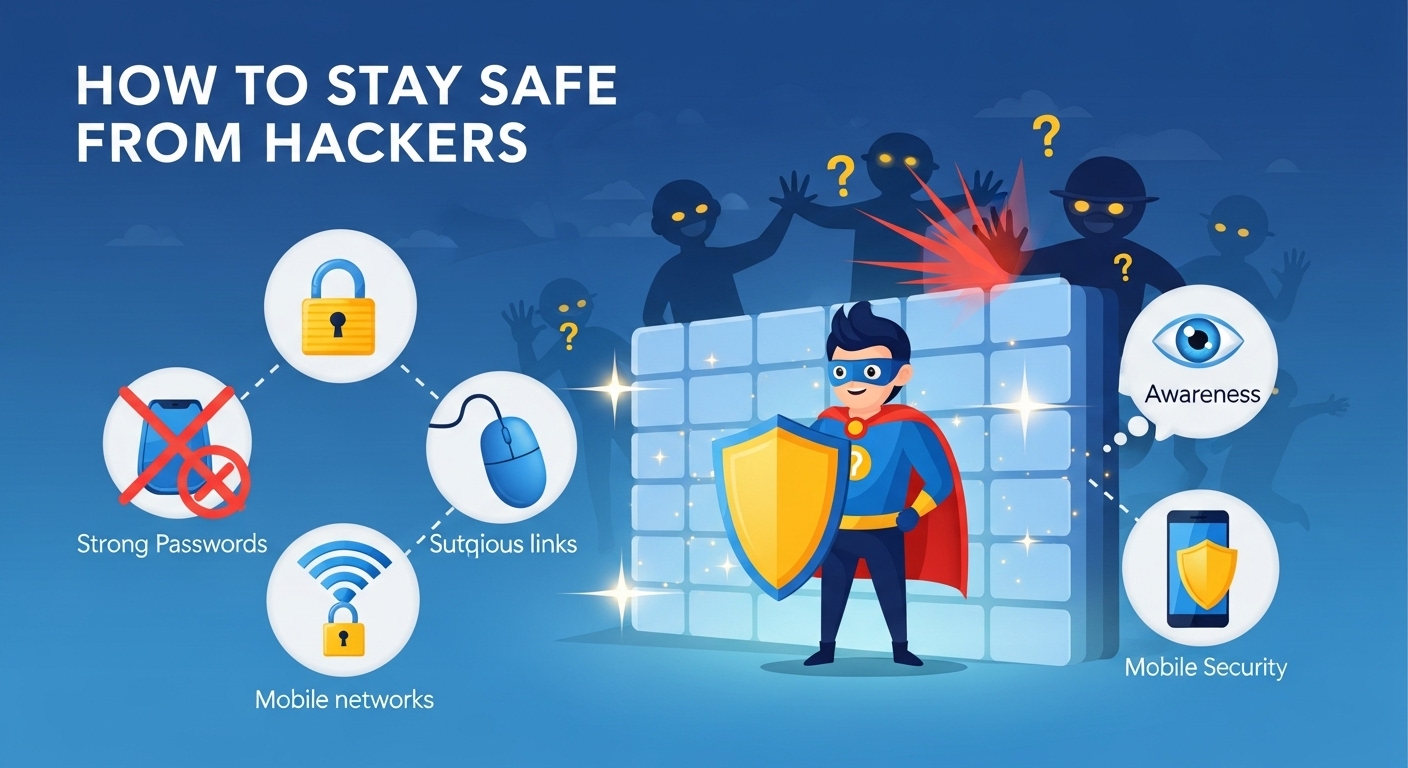
In the digital age, the internet has become an inseparable part of daily life. People use it for communication, banking, shopping, work, education, entertainment, and even healthcare. While this connectivity has brought endless opportunities and convenience, it has also opened doors to new risks. Among the most dangerous of these risks are hackers. Hackers are individuals or groups who exploit weaknesses in computer systems, networks, and devices to steal information, disrupt services, or cause harm.
Staying safe from hackers is not simply a matter of installing antivirus software. It requires a deep understanding of the methods hackers use, the vulnerabilities they target, and the steps individuals and organizations can take to protect themselves. The fight against hacking is a continuous process, but with awareness and proactive measures, it is possible to reduce risks significantly.
This blog will explore the dangers posed by hackers, the common techniques they use, and practical steps everyone can take to stay safe in the digital world.
Understanding Hackers and Their Motivations
Hackers are not a single group with identical goals. Their motivations vary widely, which affects the types of attacks they launch. Some hackers are financially motivated and look to steal credit card information, bank credentials, or corporate secrets to sell on the black market. Others are politically motivated, engaging in cyberattacks to promote a cause or disrupt organizations and governments. There are also hackers who act out of curiosity or a desire to test systems for weaknesses.
It is important to note that not all hackers are malicious. Ethical hackers, also known as white-hat hackers, use their skills to identify vulnerabilities and help organizations strengthen their defenses. However, when most people talk about hackers, they are referring to black-hat hackers, the ones who seek to exploit systems for personal gain or malicious purposes.
By understanding what motivates hackers, individuals can better appreciate the importance of protecting their digital presence.
Common Hacking Techniques
Hackers use a wide range of techniques to infiltrate systems and steal data. Some of the most common include:
Phishing Attacks
Phishing is one of the oldest and most effective forms of hacking. In a phishing attack, hackers trick victims into revealing personal information such as usernames, passwords, or financial details by pretending to be a trusted entity. This is often done through deceptive emails or fake websites that look legitimate.
Malware Infections
Malware refers to malicious software designed to damage or infiltrate systems. Viruses, worms, ransomware, and spyware are all types of malware. Hackers distribute malware through infected files, software downloads, or malicious links. Once installed, malware can steal data, lock systems, or spy on user activities.
Password Cracking
Weak or reused passwords make it easy for hackers to gain access to accounts. Attackers use techniques like brute-force attacks, where they try every possible combination of characters, or dictionary attacks, where they use common words and phrases to guess passwords.
Man-in-the-Middle Attacks
In a man-in-the-middle attack, hackers intercept communication between two parties, often on unsecured public Wi-Fi networks. This allows them to steal sensitive data such as login credentials or financial information.
SQL Injection
Many websites use databases to store information. If not properly secured, hackers can exploit vulnerabilities in the database code to access or manipulate data. This is known as an SQL injection attack.
Denial-of-Service Attacks
Denial-of-service attacks overwhelm a website or network with traffic, making it unavailable to users. While these attacks may not always result in data theft, they can disrupt services and cause significant financial losses.
These techniques show just how creative and determined hackers can be. The challenge for individuals and organizations is to stay one step ahead by implementing strong security measures.
Building Strong Password Practices
One of the simplest yet most effective ways to protect against hackers is to use strong passwords. Weak passwords remain one of the biggest vulnerabilities in cybersecurity. A strong password should be long, unique, and include a mix of uppercase letters, lowercase letters, numbers, and symbols.
Avoid using easily guessable information such as birthdays, names, or common words. It is also important to avoid reusing the same password across multiple accounts. If one account is compromised, reused passwords can give hackers access to all other accounts linked to the same credentials.
Password managers can help by generating and storing complex passwords securely. This way, users only need to remember one master password while the tool handles the rest. Two-factor authentication should also be enabled whenever possible to add another layer of protection.
Keeping Software Updated
Hackers often exploit vulnerabilities in outdated software. Operating systems, applications, and even browser plugins can contain security holes that cybercriminals use to gain access. Software developers regularly release updates that patch these vulnerabilities.
Keeping devices updated is essential for staying safe from hackers. Automatic updates should be enabled whenever possible to ensure that security patches are installed promptly. Neglecting updates can leave systems exposed to known threats that could otherwise have been prevented.
Using Secure Connections
Public Wi-Fi networks are convenient but also dangerous. Hackers often target unsecured networks to launch man-in-the-middle attacks. To stay safe, avoid accessing sensitive accounts such as online banking when connected to public Wi-Fi.
Using a virtual private network, or VPN, is another effective way to secure connections. A VPN encrypts internet traffic, making it much harder for hackers to intercept and steal data. Even on public networks, a VPN can provide a strong layer of protection.
At home, securing the Wi-Fi network with a strong password and modern encryption standards is equally important. Default router settings should be changed to prevent unauthorized access.
Protecting Personal Information
Hackers thrive on personal information. Social media accounts, online forms, and even casual posts can provide valuable data that hackers can exploit. Oversharing on social media can reveal clues that make it easier for attackers to guess passwords or answer security questions.
To stay safe, be mindful of the information shared online. Limit what is publicly visible and adjust privacy settings to control who can see personal posts. Be cautious when filling out forms or surveys that ask for unnecessary details. The less personal data available, the harder it is for hackers to build profiles for exploitation.
Recognizing Phishing Attempts
Phishing remains one of the most common ways hackers target individuals. Being able to recognize phishing attempts is essential. Warning signs include emails that create a sense of urgency, requests for sensitive information, or suspicious links.
Always verify the sender’s email address and be cautious about clicking on links or downloading attachments from unknown sources. When in doubt, contact the company or individual directly through official channels rather than replying to suspicious messages. Developing a skeptical mindset toward unexpected digital communication can go a long way in preventing phishing attacks.
Securing Devices with Antivirus and Firewalls
Antivirus software remains a vital defense against hackers. It helps detect and remove malware before it can cause damage. Firewalls act as barriers that block unauthorized access to networks. Together, these tools provide a strong foundation for cybersecurity.
Modern antivirus software often includes features such as real-time scanning, ransomware protection, and web browsing safeguards. Regular scans and updates ensure that these defenses remain effective against the latest threats.
Backing Up Data Regularly
Hackers often use ransomware attacks to lock victims out of their files and demand payment for access. The best defense against such attacks is regular data backups. By storing copies of important files on external drives or secure cloud storage, victims can restore their systems without giving in to hacker demands.
Backups should be performed regularly and tested to ensure they work properly. Ideally, multiple copies should be kept in different locations to provide redundancy in case one backup is compromised.
Staying Informed and Educated
Cybersecurity is a constantly evolving field. Hackers continually develop new methods of attack, and staying safe requires staying informed. Reading about the latest threats, attending training sessions, or simply following reliable sources of cybersecurity news can help individuals recognize emerging dangers.
For organizations, employee training is crucial. Human error is often the weakest link in security. Teaching employees how to recognize phishing attempts, create strong passwords, and follow security protocols can dramatically reduce risks.
The Importance of Digital Hygiene
Digital hygiene refers to the practice of regularly maintaining and cleaning digital systems. Just like physical hygiene, digital hygiene is essential for preventing harm. This includes removing unused applications, clearing browser caches, deleting old files, and regularly reviewing security settings.
By practicing good digital hygiene, individuals reduce the number of potential vulnerabilities that hackers could exploit. It also makes systems run more efficiently, creating a win-win situation.
Protecting Mobile Devices
Mobile devices have become prime targets for hackers. People use their smartphones for banking, shopping, communication, and work, making them treasure troves of personal information. To stay safe, mobile devices should always be secured with passwords, fingerprint recognition, or facial identification.
Applications should only be downloaded from trusted sources such as official app stores. Permissions should be reviewed carefully to ensure apps are not accessing more data than necessary. Mobile operating systems should be kept updated, and lost or stolen devices should be remotely locked or wiped to prevent unauthorized access.
The Role of Multi-Factor Authentication
Multi-factor authentication, often abbreviated as MFA, adds an extra layer of security beyond passwords. With MFA, users must provide two or more forms of verification, such as a password and a one-time code sent to a mobile device. Even if hackers manage to steal a password, they are less likely to gain access without the second factor.
Many online services, including email providers, social media platforms, and banks, now offer MFA options. Enabling this feature significantly enhances account security and is one of the simplest yet most effective steps for staying safe.
Future Trends in Cybersecurity
The battle between hackers and security experts is ongoing. As technology advances, hackers will continue to find new ways to exploit systems. However, the tools available to defend against them are also improving. Artificial intelligence is increasingly being used to detect unusual behavior and stop attacks before they cause damage. Biometric authentication methods such as fingerprints and facial recognition are becoming more common, providing stronger forms of identity verification.
Quantum computing, while still in its early stages, poses both opportunities and challenges for cybersecurity. It could potentially break traditional encryption methods, forcing the development of new, more secure standards. Preparing for these future changes is essential for maintaining digital safety.
Conclusion
Staying safe from hackers requires constant vigilance, awareness, and proactive action. Hackers will always seek vulnerabilities, but individuals and organizations can make themselves harder targets by implementing strong security practices. From building strong passwords and enabling multi-factor authentication to keeping software updated and practicing digital hygiene, there are countless steps that can be taken to protect personal and professional information.
The digital world offers countless benefits, but with those benefits come risks. By staying informed, cautious, and prepared, it is possible to enjoy the advantages of modern technology without falling victim to cybercrime. The rise of hackers has made cybersecurity more important than ever, but with the right mindset and tools, staying safe is within everyone’s reach.