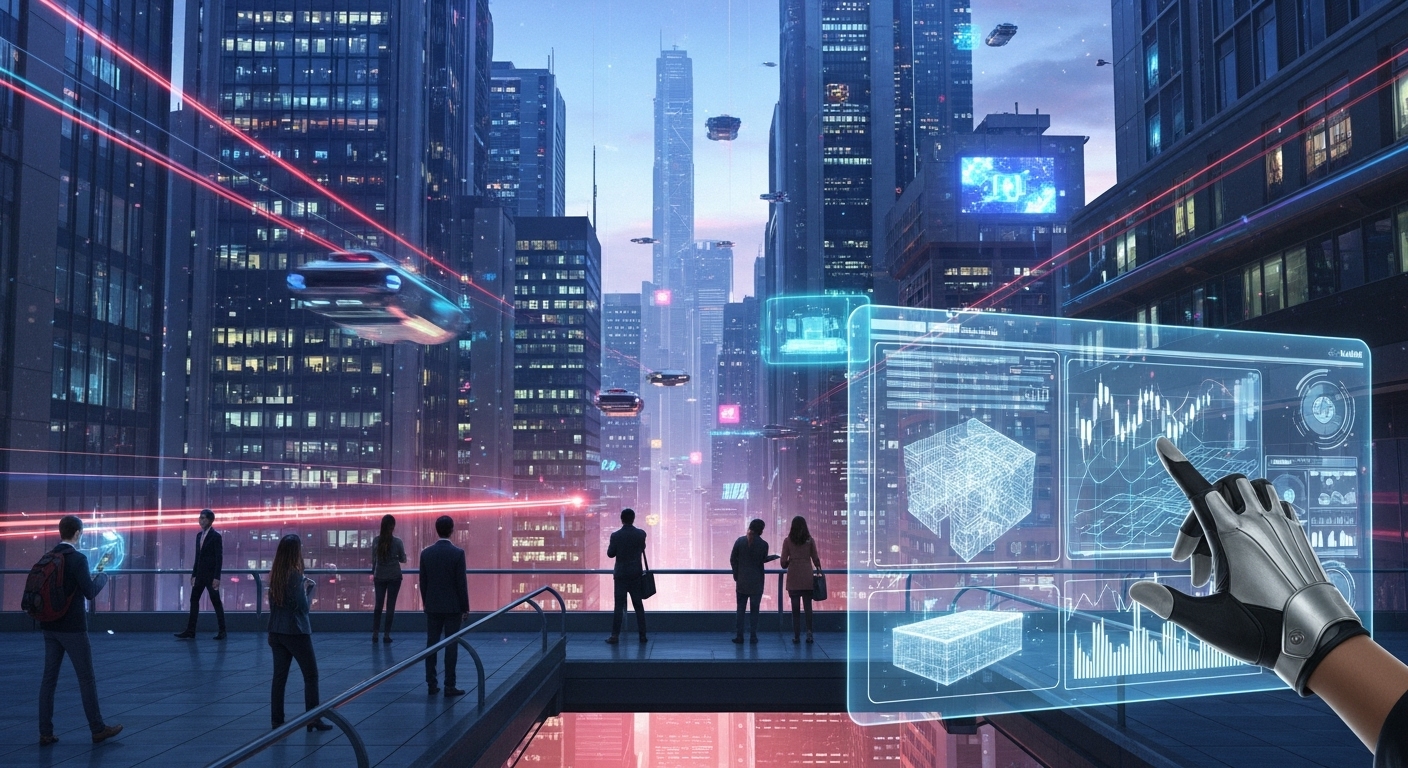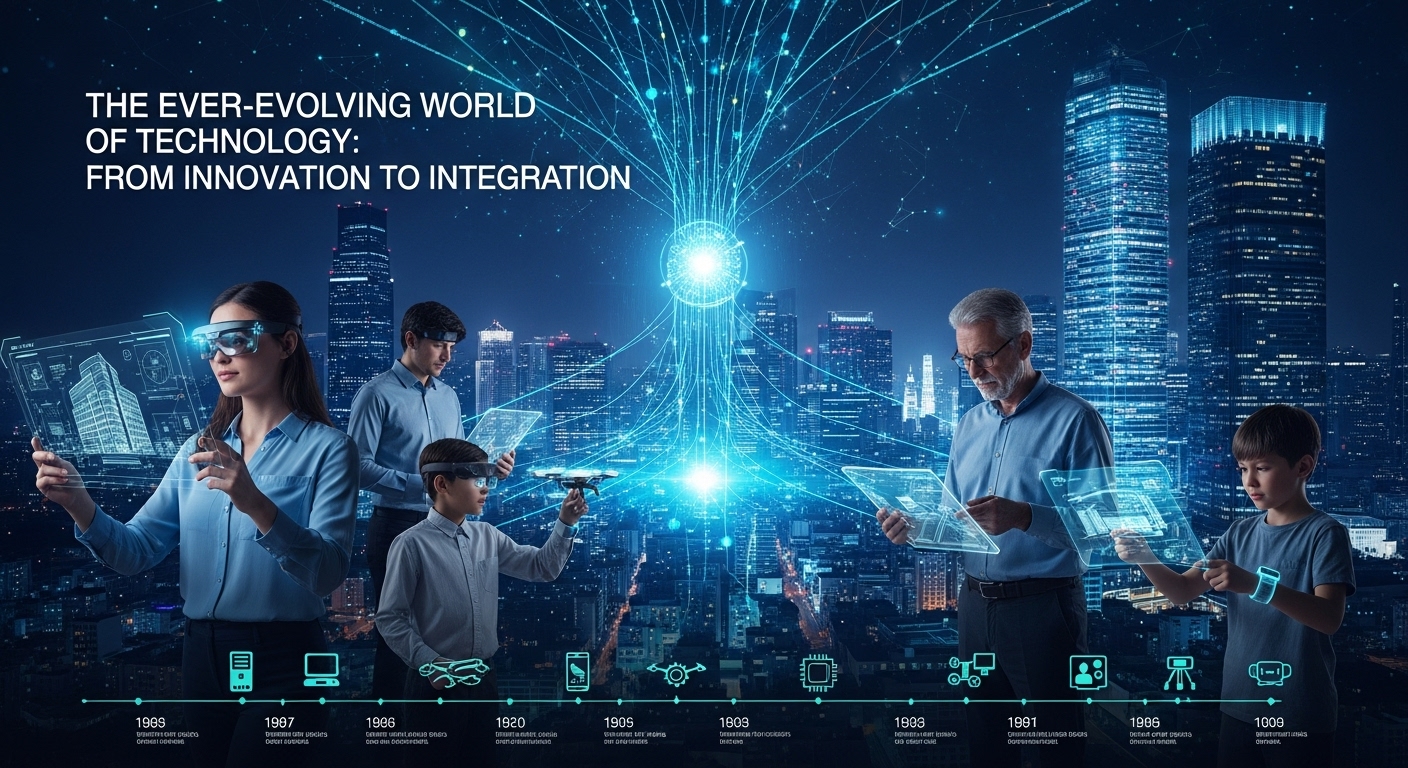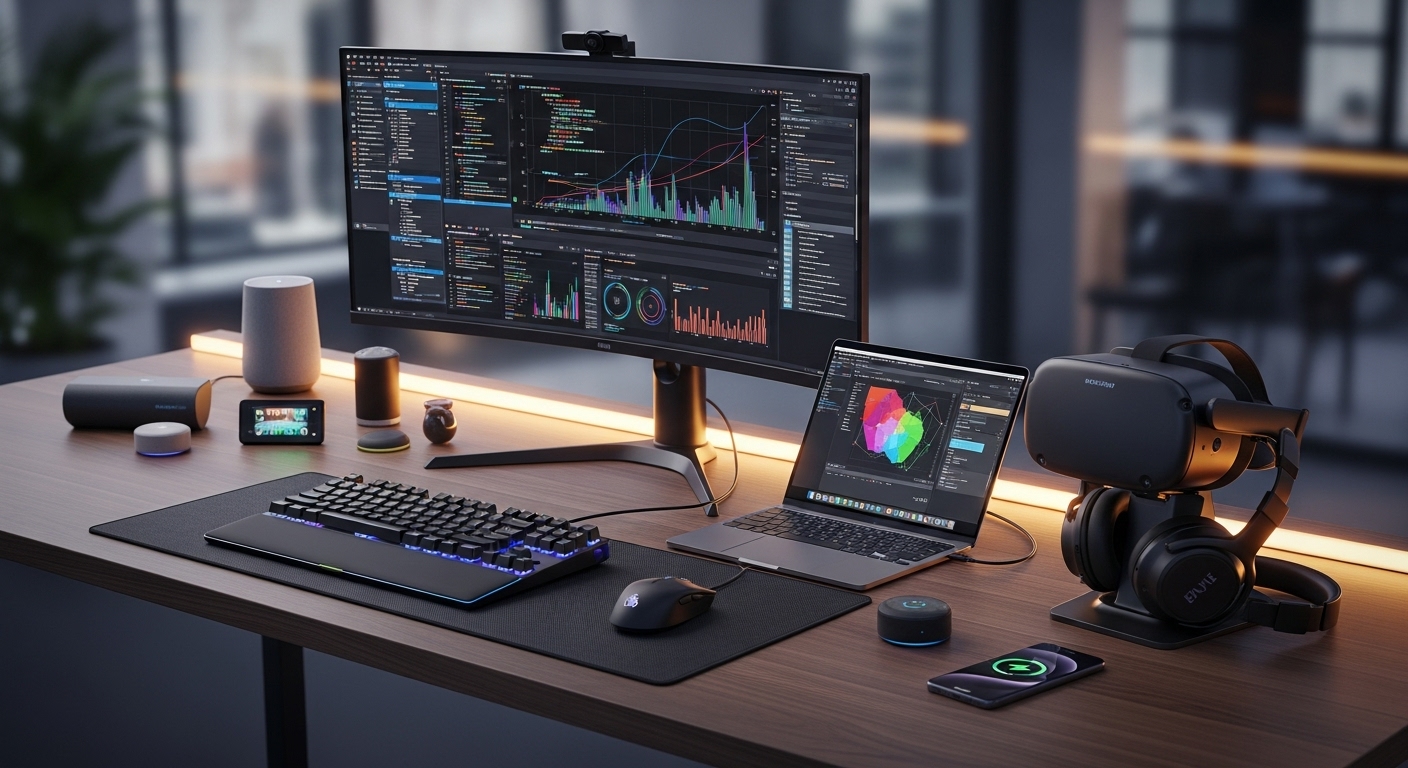
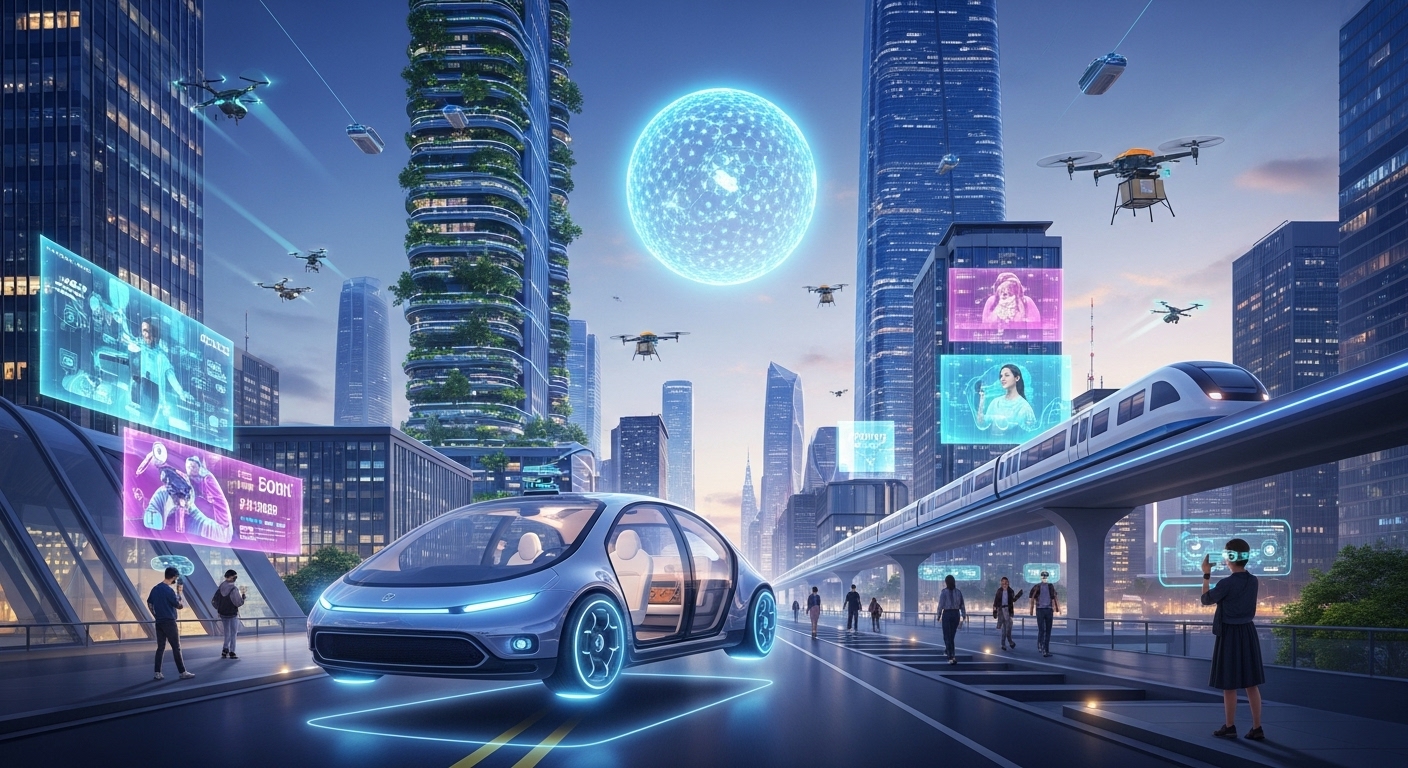
Introduction: The Pulse of a Digital Era
Technology is the invisible force that moves the modern world. It powers our communication, fuels our industries, transforms our societies, and reshapes the very fabric of human life. What was once the realm of science fiction—talking machines, instant global communication, artificial intelligence—is now woven into our daily existence. The twenty-first century has been defined by an explosion of innovation, and yet we are only at the beginning of what technology can do.
From the dawn of the internet to the rise of artificial intelligence, technology has continuously rewritten the rules of possibility. The speed of progress has been astonishing. A single smartphone now holds more computing power than the machines that first sent humans to the moon. But this progress is not without its challenges. With every innovation comes new ethical questions, social transformations, and economic disruptions. The story of technology is not just about machines—it is the story of humanity itself.
The Foundations: From the Industrial Age to the Digital Revolution
The journey of modern technology began long before the digital age. The industrial revolution of the 18th and 19th centuries marked humanity’s first great leap into mechanization. Steam engines, textile machines, and electricity revolutionized production and transportation. The focus then was on harnessing energy and improving efficiency, transforming agricultural societies into industrial powerhouses.
But it was the 20th century that truly launched the technological explosion. The invention of the computer, the rise of telecommunications, and the discovery of semiconductors set the stage for a transformation that would reach every corner of the globe. The first computers were massive, room-sized machines designed for governments and large corporations. Yet within a few decades, they shrank into compact personal devices capable of fitting into our pockets.
The digital revolution of the late 20th century marked a turning point. It wasn’t just about machines anymore—it was about information. The birth of the internet connected people in ways that were previously unimaginable. Knowledge was no longer confined to libraries or universities; it became accessible to anyone with a connection. The internet democratized learning, commerce, and creativity, giving rise to a new global economy built on data and connectivity.
The Internet: The Nervous System of Modern Civilization
The internet has become the backbone of modern life. What began as a network for sharing academic information between universities evolved into a global ecosystem that shapes how we live, work, and think. The early days of dial-up connections and static web pages have given way to a hyperconnected world where social media, streaming platforms, and cloud computing define our daily experiences.
The rise of social networks changed not only communication but also culture and politics. People from across the world can connect instantly, forming communities that transcend geography. At the same time, this new connectivity has sparked concerns about privacy, misinformation, and mental health. The internet, like all powerful tools, mirrors both the best and worst of human behavior.
E-commerce redefined the way we shop, while online banking and digital payments transformed financial systems. Entire industries—travel, publishing, entertainment—have been reinvented by digital platforms. The internet has become a living, breathing organism that grows with each passing second, feeding on data and evolving through human interaction.
The Rise of Artificial Intelligence
Among all modern technologies, artificial intelligence stands out as the most transformative. AI is not a single technology but a constellation of methods that enable machines to simulate aspects of human intelligence. From speech recognition and image analysis to autonomous vehicles and predictive algorithms, AI is reshaping every industry imaginable.
The dream of artificial intelligence has existed for decades, but only recently has it become practical on a large scale. Advances in computing power, machine learning algorithms, and access to vast data sets have turned AI from theory into reality. Today, algorithms can write music, diagnose diseases, and even engage in complex conversations.
AI’s potential is immense, but so are its implications. It challenges our ideas about creativity, labor, and even consciousness. Automation powered by AI is transforming workplaces, increasing efficiency but also displacing certain types of jobs. Ethical questions arise about bias in algorithms, data privacy, and the accountability of machine-made decisions.
In many ways, AI is a mirror reflecting our ambitions and anxieties. It offers a vision of progress and convenience but also forces society to rethink what it means to be human in an age of intelligent machines. The challenge moving forward is to develop AI that enhances humanity rather than replacing it.
The Smartphone Revolution: A Computer in Every Hand
Perhaps no technological innovation has had as profound a social impact as the smartphone. When mobile phones first appeared, they were bulky, expensive, and used primarily for calls. Today, they are compact supercomputers that manage nearly every aspect of our lives—from communication and navigation to entertainment and finance.
The smartphone is a gateway to the digital universe. It connects billions of people to the internet, making information and services instantly accessible. The rise of mobile applications created entire industries around convenience and personalization. Messaging apps, social media, ride-sharing, and mobile banking all emerged from this handheld revolution.
Yet with this constant connectivity comes new challenges. The smartphone has blurred the line between work and personal life, leading to what some call “digital fatigue.” Our dependence on these devices raises questions about attention, privacy, and even mental well-being. Still, their transformative power cannot be denied. The smartphone has become the most personal and indispensable piece of technology in human history.
Cloud Computing: The Infrastructure of the Digital Age
Behind every modern app, platform, and digital service lies the invisible architecture of cloud computing. Instead of relying on physical storage and local servers, the cloud allows data to be stored and processed remotely, enabling access from anywhere in the world. This shift has made digital services more scalable, efficient, and collaborative.
Businesses no longer need to maintain expensive IT infrastructure. Startups can deploy global applications with minimal resources. The cloud also enables the rise of new paradigms such as Software-as-a-Service, where users pay for access rather than ownership.
For individuals, the cloud powers everything from email and photo storage to online education and virtual collaboration. It represents a move toward decentralization—a world where data flows freely and access is more important than physical possession.
The Internet of Things: A Connected World
The Internet of Things (IoT) is extending the reach of digital connectivity beyond computers and smartphones. Everyday objects—from refrigerators to cars to city streetlights—are being embedded with sensors and network capabilities. These connected devices collect and share data, creating intelligent systems that can adapt and respond to real-world conditions.
Smart homes that adjust lighting and temperature automatically, wearable devices that monitor health metrics, and connected cities that manage traffic flow in real time—all these innovations are part of the IoT ecosystem. The data generated by these devices fuels analytics and automation, making systems more responsive and efficient.
However, with connectivity comes vulnerability. As billions of devices join the internet, cybersecurity becomes more critical than ever. Protecting data and ensuring privacy in an interconnected world is one of the defining challenges of our time.
Renewable Energy and Green Technology
As technology evolves, so too does the awareness of its environmental impact. The industrial and digital revolutions have consumed immense amounts of energy, contributing to climate change. In response, the world is turning toward renewable energy and sustainable innovation.
Solar panels, wind turbines, and electric vehicles are no longer niche experiments—they are becoming mainstream. Advances in battery storage, energy efficiency, and smart grids are paving the way for a cleaner future. Green technology represents not just an environmental necessity but also an economic opportunity, creating new industries and jobs centered on sustainability.
Technology is now being used to repair the damage it once caused. Artificial intelligence helps optimize energy consumption, drones monitor deforestation, and sensors track pollution levels. The same innovation that once fueled industrial pollution may now hold the key to ecological restoration.
The Era of Biotechnology and Human Enhancement
While digital technology transforms our external world, biotechnology is beginning to transform our internal one. Advances in genetics, bioengineering, and medical technology are pushing the boundaries of what it means to be human.
CRISPR and other gene-editing technologies allow scientists to modify DNA with unprecedented precision. Personalized medicine tailors treatments to an individual’s genetic profile. Prosthetics and brain–computer interfaces are blurring the line between biology and technology, giving rise to the concept of the “augmented human.”
These developments hold immense promise for curing diseases, extending life, and enhancing physical and cognitive abilities. Yet they also raise profound ethical questions. Should humans alter their biology to become “better” versions of themselves? Where does healing end and enhancement begin? The convergence of biology and technology may be the next great frontier of human evolution.
The Future of Work: Automation, Creativity, and Human Adaptation
Technology is not only changing what we do but how we work. Automation, robotics, and AI are reshaping industries and redefining the skills required for success. Routine and repetitive tasks are increasingly handled by machines, while human workers focus on creativity, problem-solving, and emotional intelligence.
Remote work, accelerated by digital collaboration tools, has become a permanent fixture in the modern economy. Companies now operate across continents without physical offices, and individuals have greater flexibility than ever before. However, this shift also challenges traditional notions of work-life balance and corporate culture.
The key to thriving in this new world is adaptability. Lifelong learning and digital literacy are becoming essential. As technology continues to evolve, so must the human capacity to learn, unlearn, and reinvent.
The Ethical Frontier: Balancing Progress with Responsibility
Every major technological leap brings ethical dilemmas. Data privacy, surveillance, misinformation, and inequality are the shadows cast by innovation. The same algorithms that connect us can also divide us. The same data that drives progress can also be exploited.
Society faces the urgent task of developing ethical frameworks that guide technological development. Governments, corporations, and citizens must work together to ensure that technology serves humanity rather than undermines it. Transparency, accountability, and inclusivity must become central principles of the digital age.
Ethical technology is not an obstacle to innovation—it is the foundation of sustainable progress. Without trust, even the most advanced systems lose their value. The future will depend not just on what we can build but on how wisely we choose to use it.
Looking Ahead: The Next Wave of Innovation
What comes next in the story of technology? The horizon is filled with possibilities that seem almost magical by today’s standards. Quantum computing promises to solve problems that are currently beyond the reach of even the most powerful supercomputers. Space technology is opening new frontiers for exploration and even habitation. Virtual and augmented reality are blurring the boundaries between physical and digital experiences.
Perhaps the most intriguing development is the convergence of multiple fields—AI, biotechnology, nanotechnology, and quantum physics—into a single ecosystem of innovation. This fusion may give rise to technologies that can rewrite the rules of existence itself.
The question is not whether progress will continue—it will. The real question is whether humanity can evolve morally and intellectually fast enough to keep up with its own creations.
Conclusion: Humanity and the Machine
Technology has always been more than the sum of its parts. It is the embodiment of human imagination, curiosity, and ambition. Every device, algorithm, and discovery reflects our collective desire to transcend limits and shape our own destiny.
Yet, for all its power, technology remains a tool—a mirror of its creators. It can liberate or enslave, connect or isolate, heal or harm. The choices we make today will determine which future unfolds.
We are living in the most transformative period in human history. The next generation will not just inherit our technologies—they will inherit the values we embed within them. The story of technology is far from over. It is a story still being written, one innovation, one idea, and one human decision at a time.