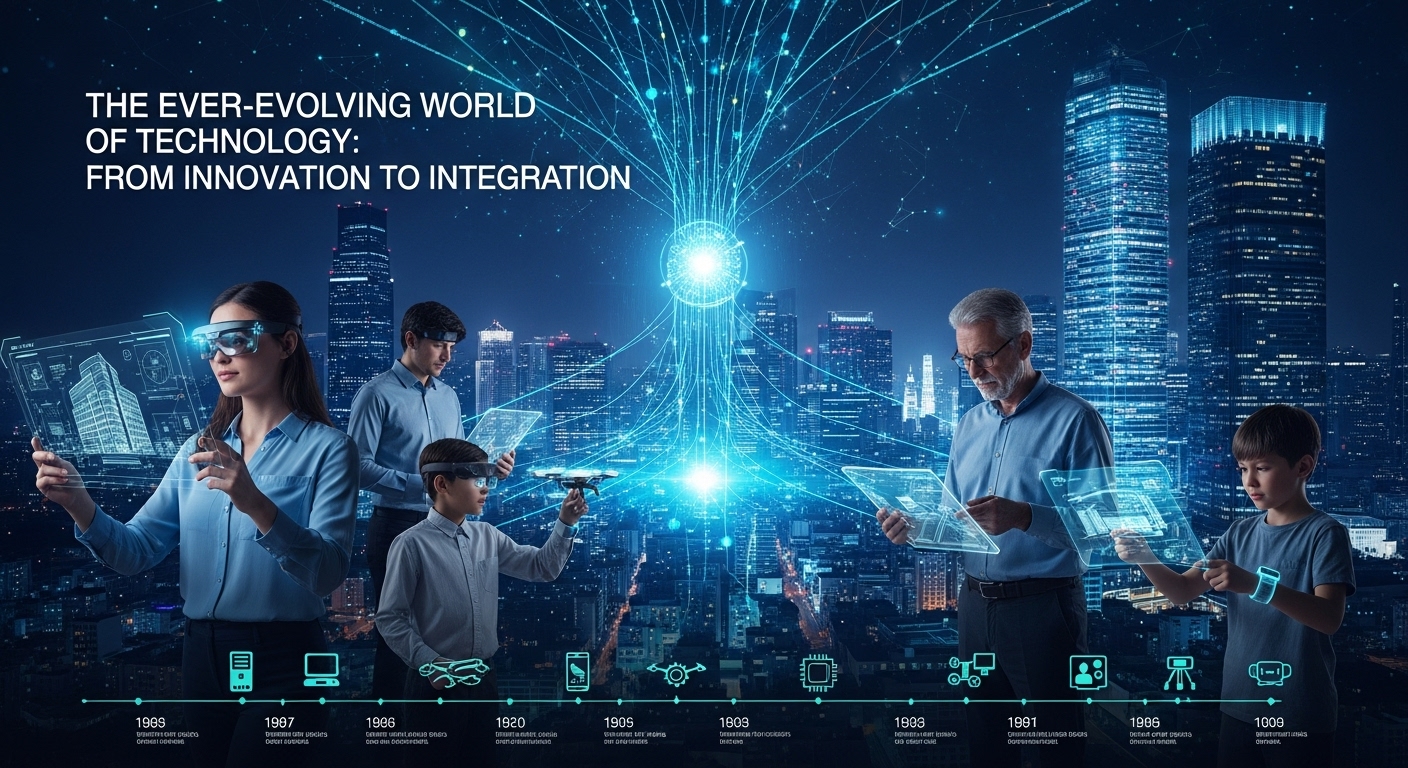

Technology has become the cornerstone of modern life, influencing every aspect of human existence. From communication and healthcare to transportation and entertainment, it is hard to imagine a world without the transformative impact of technological advancements. The pace of innovation continues to accelerate, bringing new possibilities while reshaping how we work, learn, and interact with one another. In this blog, we will explore the most significant technological trends, their applications, and the opportunities and challenges they present for society.
Artificial Intelligence: Transforming Industries and Daily Life
Artificial intelligence, or AI, is no longer a futuristic concept; it is a driving force behind many modern innovations. AI systems are capable of processing vast amounts of data, recognizing patterns, and making decisions more efficiently than humans in certain areas.
In healthcare, AI assists doctors by analyzing medical scans, detecting early signs of diseases, and recommending personalized treatments. These capabilities improve diagnostic accuracy and save countless lives each year. In the financial sector, AI predicts market trends, automates transactions, and identifies fraudulent activities, increasing both efficiency and security. Beyond professional applications, AI powers everyday tools such as virtual assistants, recommendation engines, and smart home devices, making daily life more convenient and personalized.
Despite its promise, AI raises ethical concerns, including data privacy, algorithmic bias, and the potential displacement of human jobs. Responsible development and regulation are essential to ensure that AI benefits society without unintended consequences.
Quantum Computing: A Leap Into the Future
Quantum computing represents a revolutionary leap in computational power. Unlike classical computers, which rely on binary bits to process information, quantum computers use qubits that can exist in multiple states simultaneously. This unique property allows quantum systems to solve highly complex problems at speeds previously unimaginable.
The potential applications of quantum computing are vast. In medicine, quantum algorithms can simulate molecular interactions, accelerating drug discovery and the development of personalized treatments. In cybersecurity, quantum computing could break traditional encryption methods, prompting the need for new approaches to data protection. While still in its early stages, quantum computing holds the potential to redefine computing, research, and technological capabilities on a global scale.
Biotechnology: Engineering Life and Health
Biotechnology is transforming healthcare, agriculture, and environmental conservation. Advances in gene editing, particularly through tools like CRISPR, allow scientists to modify DNA with remarkable precision, opening new doors in medicine and sustainability.
In healthcare, biotechnology enables treatments for genetic disorders, cancer, and other serious illnesses. Personalized medicine, which tailors therapies to an individual’s genetic profile, is becoming a reality, improving patient outcomes and reducing side effects. In agriculture, genetically modified crops are more resistant to pests, diseases, and extreme weather conditions, helping address global food security challenges. Additionally, biotechnology contributes to environmental sustainability through biofuels, biodegradable materials, and engineered organisms that help clean pollutants from ecosystems.
Ethical considerations are critical in biotechnology. Responsible research and regulation ensure that advancements do not compromise human health or ecological balance.
Renewable Energy: Powering a Sustainable Future
The global need for clean energy has never been more urgent. Renewable energy technologies, including solar, wind, and energy storage systems, are transforming the way energy is produced, stored, and consumed.
Solar panels have become more efficient and cost-effective, while wind turbines harness natural energy more effectively than ever. Advanced battery systems store energy for use during periods when production is low, ensuring reliable power supply. Electric vehicles are benefiting from these developments, reducing reliance on fossil fuels and lowering carbon emissions. Smart grids optimize energy distribution, reduce waste, and enhance sustainability in urban infrastructure. These advancements are creating a path toward a cleaner and more resilient energy future.
The Internet of Things: Creating a Connected World
The Internet of Things, or IoT, is connecting devices and systems in ways that make daily life more efficient and intelligent. IoT enables objects to collect and exchange data, allowing environments to respond to human behavior automatically.
In homes, IoT devices manage lighting, climate control, and security systems, improving convenience and energy efficiency. In industries, IoT sensors monitor equipment to prevent downtime, optimize production, and reduce maintenance costs. Cities use IoT to manage traffic, conserve energy, and provide better public services. By integrating technology into everyday objects, IoT transforms ordinary environments into intelligent, responsive spaces.
Virtual Reality and Augmented Reality: Immersive Experiences
Virtual reality (VR) and augmented reality (AR) are redefining how humans experience digital content. VR immerses users in completely digital environments, while AR overlays digital information onto the physical world, enhancing real-world perception.
In education, VR allows students to experience historical events, perform complex scientific experiments, or explore distant locations interactively. AR is revolutionizing healthcare by providing surgeons with real-time information during operations, improving precision and patient outcomes. Both VR and AR offer innovative professional training solutions, enabling employees to practice high-risk tasks safely in immersive simulations. These technologies bridge the gap between learning, entertainment, and practical application.
Cybersecurity: Protecting the Digital World
As technology becomes deeply integrated into daily life, cybersecurity has become an essential priority. Cyber threats such as ransomware, phishing attacks, and data breaches are increasingly sophisticated, requiring robust solutions to protect sensitive information.
Artificial intelligence plays a key role in cybersecurity by detecting unusual behavior, predicting potential threats, and responding in real time. However, cybercriminals also use AI to develop advanced attack methods, creating a continuous arms race. Strong cybersecurity practices, including encryption, multi-factor authentication, and proactive monitoring, are critical to safeguarding data, infrastructure, and personal privacy in an increasingly connected world.
Automation and Robotics: Redefining Work and Industry
Automation and robotics are transforming industries by taking on repetitive, hazardous, or precision-based tasks. In manufacturing, robots assemble products with remarkable speed and accuracy, reducing errors and improving efficiency. In logistics, automation streamlines inventory management and order fulfillment, lowering costs and improving service reliability.
Emerging technologies, including autonomous vehicles, drones, and robotic assistants, are entering mainstream applications, enhancing productivity and convenience. While automation improves efficiency, it also raises concerns about workforce adaptation. Reskilling and upskilling initiatives are essential to help workers thrive alongside technology and remain relevant in an evolving job market.
Ethical Implications of Technological Advancement
Technological innovation brings both opportunities and ethical responsibilities. Issues such as AI bias, privacy concerns, automation-driven job loss, and biotechnology regulation require careful consideration.
Ethical frameworks, transparency, and inclusive policymaking are essential to ensure that technology advances in ways that benefit society as a whole. Collaboration among governments, businesses, and communities can help balance innovation with moral responsibility, ensuring progress does not come at the expense of human welfare or social equity.
The Future of Technology: Opportunities and Challenges
The future of technology promises remarkable advancements but also presents significant challenges. Artificial intelligence, quantum computing, biotechnology, renewable energy, IoT, VR, AR, cybersecurity, and automation are shaping a world that is more interconnected, efficient, and intelligent than ever before.
These innovations have the potential to improve healthcare, productivity, sustainability, and quality of life. At the same time, they raise questions about ethics, environmental impact, social inequality, and technological dependence. Successfully navigating this future requires proactive governance, responsible innovation, and an emphasis on lifelong learning and adaptability.
Conclusion: Embracing the Next Technological Era
Technology is more than a tool—it is a transformative force that shapes society. AI enhances intelligence, quantum computing expands problem-solving capabilities, biotechnology redefines life, and renewable energy powers a sustainable future. IoT, VR, AR, robotics, and cybersecurity ensure that the digital world is interconnected, immersive, and secure.