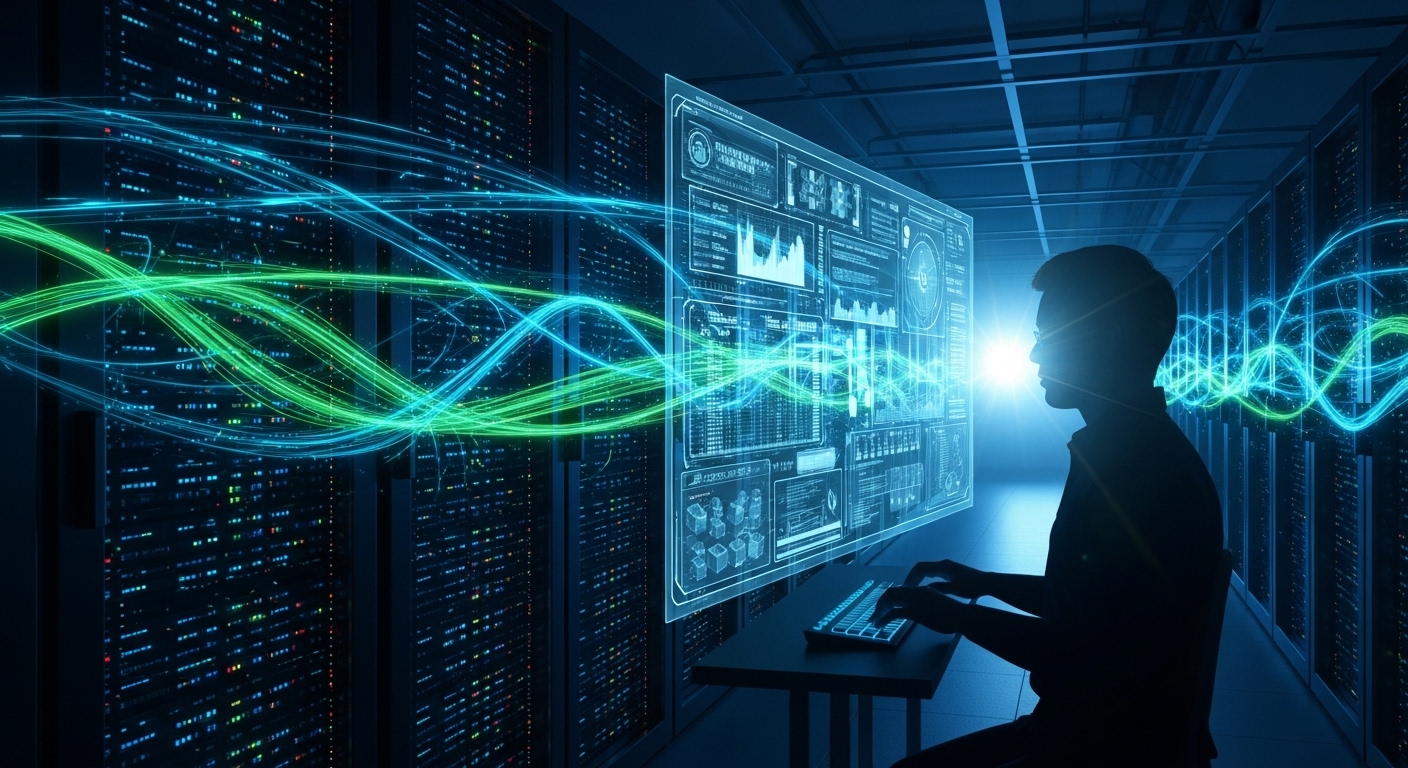

Technology has always been at the forefront of human progress, shaping the way we live, work, and interact. From the invention of the wheel to the rise of the internet, each technological breakthrough has transformed society in profound ways. Today, as we stand at the cusp of a new technological era, innovations in fields like artificial intelligence, biotechnology, quantum computing, and renewable energy are poised to redefine the future. This blog explores the cutting-edge developments that are not only changing the tech landscape but also influencing the way we experience the world.
Artificial Intelligence: Beyond Human Imagination
Artificial intelligence (AI) has transitioned from science fiction to a tangible reality that impacts nearly every industry. Modern AI systems can perform tasks that were once considered uniquely human, including language processing, image recognition, decision-making, and even creative work. The capabilities of AI have expanded with the introduction of machine learning and deep learning, allowing systems to learn from data, improve performance over time, and make predictions with remarkable accuracy.
AI is now being applied in healthcare to analyze medical images, detect diseases at an early stage, and suggest personalized treatment plans. In business, AI-driven analytics provide insights into consumer behavior, optimize supply chains, and enhance customer experiences. Moreover, AI-powered virtual assistants are transforming daily life, managing schedules, providing information, and even offering emotional support. As AI continues to evolve, ethical considerations such as privacy, bias, and accountability will be crucial in ensuring responsible development.
The Rise of Quantum Computing
Quantum computing represents a paradigm shift in how we process information. Unlike classical computers that use bits to represent data as 0 or 1, quantum computers use qubits, which can exist in multiple states simultaneously. This property, known as superposition, along with quantum entanglement, allows quantum computers to perform complex calculations exponentially faster than traditional machines.
The implications of quantum computing are vast. In cryptography, quantum systems can break codes that are currently considered unbreakable, prompting the need for quantum-resistant encryption. In medicine, quantum simulations could revolutionize drug discovery by accurately modeling molecular interactions, significantly reducing the time and cost of research. Furthermore, quantum computing has the potential to optimize large-scale logistical problems, financial modeling, and climate prediction with unprecedented speed and precision. While the technology is still in its early stages, its potential to transform industries is undeniable.
Biotechnology and the New Era of Human Enhancement
Biotechnology is bridging the gap between biology and technology, unlocking possibilities that were once considered the realm of science fiction. Gene editing technologies, such as CRISPR, enable scientists to modify DNA with extraordinary precision. This breakthrough has opened the door to potential cures for genetic diseases, improved agricultural yields, and even the possibility of enhancing human abilities.
The field of synthetic biology is also gaining momentum, allowing the creation of entirely new organisms or biological systems designed for specific purposes. These innovations could lead to sustainable biofuels, environmentally friendly materials, and advanced medical therapies. Additionally, wearable biotech devices are enhancing human capabilities by monitoring health metrics in real-time, providing insights that were previously unavailable outside a laboratory setting. As biotechnology progresses, ethical and societal discussions surrounding human enhancement and genetic modification will become increasingly significant.
Renewable Energy: Powering a Sustainable Future
The global shift toward renewable energy is one of the most critical technological movements of our time. Innovations in solar, wind, and hydroelectric power are transforming how we generate and consume energy. Solar panels have become more efficient and affordable, while wind turbines are harnessing energy from natural forces with increasing effectiveness. Energy storage solutions, such as advanced batteries, are addressing the intermittency challenges of renewable sources, enabling a more reliable and stable energy supply.
In addition to power generation, smart grids and energy management systems are optimizing energy distribution and reducing waste. By leveraging real-time data and predictive analytics, these systems can balance demand and supply, integrate renewable sources seamlessly, and minimize environmental impact. As the world grapples with climate change, renewable energy technologies are not only essential for sustainability but also for economic growth, creating new industries, jobs, and opportunities for innovation.
The Internet of Things: Connecting Everything
The Internet of Things (IoT) is revolutionizing the way we interact with the world by connecting devices, systems, and people. IoT enables everyday objects to collect and exchange data, creating a network of intelligent devices that can respond to their environment and user needs. Smart homes, wearable devices, connected vehicles, and industrial sensors are just a few examples of IoT applications that are reshaping daily life.
In industries like manufacturing and logistics, IoT provides real-time insights into equipment performance, supply chain efficiency, and operational safety. In healthcare, connected medical devices monitor patient vitals continuously, enabling proactive care and reducing hospital visits. Even cities are leveraging IoT to become smarter, using data from sensors to optimize traffic flow, manage waste, and conserve energy. The proliferation of IoT devices promises a future where information is seamlessly integrated into every aspect of our lives, improving efficiency, convenience, and decision-making.
Augmented and Virtual Reality: Redefining Human Experience
Augmented reality (AR) and virtual reality (VR) are transforming the way we perceive and interact with digital content. AR overlays digital information onto the real world, enhancing our understanding of our environment. VR, on the other hand, immerses users in a fully digital environment, offering experiences that can simulate reality or create entirely new worlds.
These technologies are finding applications beyond gaming and entertainment. In education, AR and VR enable immersive learning experiences, making complex concepts easier to understand. In healthcare, VR is used for surgical simulations, patient therapy, and pain management. The industrial sector benefits from AR-assisted maintenance, design visualization, and remote collaboration. As AR and VR technologies become more sophisticated and accessible, they will redefine communication, creativity, and even social interaction, blurring the lines between the physical and digital realms.
Robotics: Automation and Human Collaboration
Robotics has evolved from simple mechanical devices to sophisticated machines capable of performing complex tasks. Modern robots are equipped with sensors, AI, and advanced control systems, allowing them to operate autonomously or collaborate with humans safely. Robotics is transforming industries such as manufacturing, logistics, healthcare, and agriculture by improving efficiency, accuracy, and safety.
Collaborative robots, or cobots, work alongside human operators, assisting in repetitive or dangerous tasks. In healthcare, robotic systems perform delicate surgeries with unparalleled precision. In agriculture, autonomous robots manage planting, harvesting, and monitoring crops, reducing labor costs and increasing productivity. As robotics technology advances, it raises important questions about the future of work, workforce adaptation, and the ethical implications of human-robot interaction.
Cybersecurity in a Connected World
As technology becomes more integrated into every aspect of life, cybersecurity has never been more critical. The increasing prevalence of digital platforms, IoT devices, and cloud computing creates vulnerabilities that can be exploited by malicious actors. Cyberattacks can disrupt essential services, compromise sensitive data, and threaten national security.
Modern cybersecurity solutions leverage AI, machine learning, and behavioral analytics to detect and respond to threats in real-time. Organizations are investing in proactive measures such as threat intelligence, zero-trust architectures, and advanced encryption techniques to safeguard digital assets. Additionally, individuals must adopt good cybersecurity practices, including strong passwords, multi-factor authentication, and awareness of phishing and social engineering attacks. As the digital landscape grows more complex, cybersecurity will remain a central concern for governments, businesses, and individuals alike.
Space Technology: The Final Frontier
Advancements in space technology are opening new horizons for exploration, research, and commercialization. Private companies and government agencies are developing reusable rockets, advanced satellites, and space stations that expand humanity’s reach beyond Earth. The exploration of the Moon, Mars, and even asteroids presents opportunities for scientific discovery, resource extraction, and future colonization.
Satellite technology has revolutionized communication, navigation, and Earth observation. High-resolution imaging, climate monitoring, and disaster response are all enhanced by the increasing number of satellites in orbit. Furthermore, space tourism is gradually becoming a reality, allowing private citizens to experience space travel. The rapid evolution of space technology underscores the limitless potential of human ingenuity and the exciting possibilities that lie ahead.
Conclusion: Embracing the Technological Future
The pace of technological innovation is accelerating, and the impact on society is profound. Artificial intelligence, quantum computing, biotechnology, renewable energy, IoT, AR/VR, robotics, cybersecurity, and space technology are reshaping the world in ways that were once unimaginable. While these advancements offer incredible opportunities, they also pose ethical, social, and economic challenges that must be addressed responsibly.
As we move forward, it is essential to embrace technology with both curiosity and caution. By fostering innovation, prioritizing ethical considerations, and investing in education and research, we can harness the power of technology to solve global challenges, improve quality of life, and create a sustainable, inclusive future. The world of tomorrow will be defined not just by the technologies we develop but by how we choose to use them for the greater good.