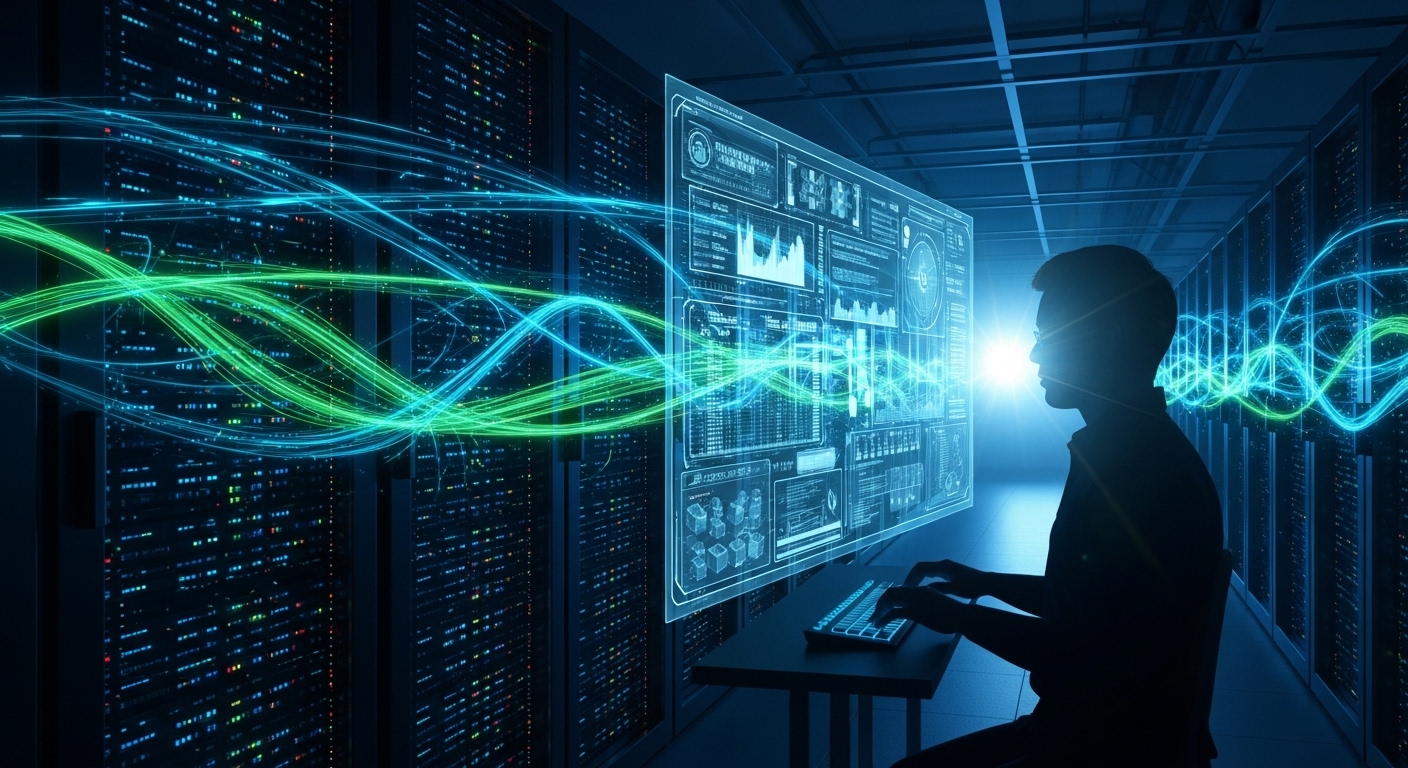

The rapid evolution of technology over the past few decades has reshaped almost every aspect of our lives. From the way we communicate to how we work, learn, and entertain ourselves, technology is deeply embedded in the fabric of modern society. Today, we are on the brink of yet another technological revolution—one that promises to bring about unprecedented changes. Artificial intelligence, quantum computing, 5G networks, and advances in biotechnology are just a few of the innovations that are setting the stage for a new era.
In this blog post, we will explore the transformative impact of technology, examine the emerging trends shaping our future, and consider the implications these innovations will have on industries, individuals, and the world at large. Join me as we navigate the digital revolution and glimpse into a future where technology continues to break boundaries and redefine what’s possible.
The Digital Revolution: A Brief History
To fully appreciate the significance of today’s technological advancements, it’s essential to understand how we got here. The digital revolution began in the mid-20th century with the development of the first computers. Early computing machines were large, cumbersome devices that could only perform basic calculations. However, as the technology evolved, computers became smaller, faster, and more affordable, allowing them to enter homes and businesses around the world.
The internet, which emerged in the 1990s, further accelerated this revolution by connecting individuals, organizations, and nations in ways that were previously unimaginable. The rise of mobile phones and smartphones in the 2000s changed the way we interact with technology, enabling instant access to information, social networks, and entertainment at the touch of a button.
In just a few decades, technology has progressed from simple machines designed to automate basic tasks to sophisticated systems capable of performing complex functions. This transformation has fundamentally altered how we live, work, and communicate. But even more exciting is the fact that this revolution is far from over.
Artificial Intelligence: The Brain Behind the Machine
Among the most exciting developments in technology today is artificial intelligence (AI). Once the stuff of science fiction, AI is now a reality that is rapidly changing the way we live and work. From voice assistants like Siri and Alexa to advanced machine learning algorithms that power self-driving cars, AI is becoming an integral part of everyday life.
AI operates on the principle that machines can be trained to perform tasks that typically require human intelligence. This includes tasks like problem-solving, language translation, image recognition, and decision-making. Machine learning, a subset of AI, enables systems to improve their performance over time by learning from data without human intervention. This ability to learn and adapt is what makes AI so powerful—and also so potentially disruptive.
In the business world, AI is transforming industries by automating tasks, improving efficiency, and enhancing decision-making. Companies are using AI-driven analytics to understand consumer behavior, predict market trends, and optimize supply chains. In healthcare, AI is being used to diagnose diseases, personalize treatments, and even assist in surgical procedures. The possibilities for AI are virtually limitless, and as technology continues to evolve, its potential will only grow.
The Rise of Quantum Computing
While AI is revolutionizing how machines think, quantum computing is set to revolutionize how they compute. Quantum computers use principles of quantum mechanics to process information in fundamentally different ways than traditional computers. Instead of using binary code (ones and zeros), quantum computers use quantum bits, or qubits, which can exist in multiple states at once. This ability to process vast amounts of data simultaneously gives quantum computers the potential to solve complex problems that would take conventional computers millennia to crack.
Quantum computing holds the promise of transforming industries such as cryptography, material science, and pharmaceuticals. For example, in cryptography, quantum computers could potentially break current encryption methods, forcing the development of new security protocols. In material science, quantum computing could help design new materials with unprecedented properties, from superconductor materials to more efficient solar cells. In healthcare, quantum computing could accelerate drug discovery by simulating molecular interactions with unparalleled accuracy.
Although quantum computing is still in its early stages, major technology companies like IBM, Google, and Microsoft are investing heavily in its development. As breakthroughs continue to occur, quantum computing is expected to unlock new frontiers of innovation, further propelling the digital revolution.
The Impact of 5G Technology
In our increasingly connected world, the need for faster and more reliable internet connectivity has never been greater. Enter 5G technology, the fifth generation of wireless communication that promises to deliver lightning-fast speeds, lower latency, and a more stable connection. While 4G networks have been transformative in their own right, 5G takes things to a whole new level.
5G technology enables download speeds that are up to 100 times faster than 4G, allowing for near-instantaneous data transfer. This will have a profound impact on industries like entertainment, healthcare, manufacturing, and transportation. For instance, in healthcare, 5G will enable the real-time transmission of high-definition medical data, allowing doctors to perform remote surgeries with precision. In transportation, autonomous vehicles will rely on 5G to communicate with each other and their surroundings, ensuring safer and more efficient travel.
In addition to improving connectivity, 5G will play a crucial role in the development of the Internet of Things (IoT), where everyday objects—from smart refrigerators to wearable health monitors—are connected to the internet. With 5G’s high bandwidth and low latency, IoT devices will be able to communicate more effectively, leading to smarter homes, cities, and businesses.
Biotechnology: Merging Science and Technology
Biotechnology is another area where technology is making incredible strides. Advances in genetic engineering, gene editing, and bioinformatics are revolutionizing the field of medicine and biology. One of the most significant breakthroughs in recent years is the development of CRISPR-Cas9, a gene-editing tool that allows scientists to make precise modifications to DNA. This technology holds the potential to cure genetic disorders, treat cancer, and even reverse the effects of aging.
Biotechnology is also playing a major role in agriculture, where genetically modified crops are being developed to withstand pests, drought, and other environmental challenges. This could help address global food security issues, especially in regions that are vulnerable to climate change.
In addition to its medical and agricultural applications, biotechnology is helping create new materials and energy sources. For example, researchers are developing biofuels made from algae and other sustainable sources, reducing our dependence on fossil fuels. They are also working on creating biodegradable plastics and other environmentally friendly materials, helping to reduce pollution and waste.
As biotechnology continues to evolve, its potential to improve our quality of life and solve some of the world’s most pressing problems is vast.
The Ethical Implications of Emerging Technologies
As technology advances, it raises important ethical questions that must be addressed. The development of AI, for instance, raises concerns about job displacement, privacy, and bias. As machines become more intelligent, there is a risk that they could replace human workers in industries ranging from manufacturing to customer service. This creates a need for responsible implementation of AI, ensuring that its benefits are shared equitably and that workers are retrained for new roles.
Similarly, the rise of biotechnology raises questions about the ethics of gene editing and genetic modification. While these technologies have the potential to cure diseases and improve human health, they also pose risks, such as the possibility of “designer babies” or unintended consequences from altering the human genome. As these technologies become more advanced, it will be essential for governments, scientists, and ethicists to work together to establish guidelines and regulations that ensure they are used responsibly.
The Future of Technology: What Lies Ahead?
As we look to the future, it’s clear that technology will continue to evolve at an exponential rate. From AI and quantum computing to biotechnology and 5G, we are standing on the precipice of a new era. These innovations will shape the way we live, work, and interact with the world around us. The possibilities are limitless, but with these advancements come challenges that must be addressed thoughtfully and responsibly.
In the coming decades, we can expect to see further convergence of technologies, with AI, quantum computing, and biotechnology working together to solve complex problems in ways we can only begin to imagine. We may see the development of smart cities, where everything from traffic management to healthcare is optimized using data-driven technologies. We may also see breakthroughs in space exploration, artificial organs, and personalized medicine that change the very fabric of human existence.
Ultimately, the future of technology is not just about new gadgets and systems; it’s about how these innovations will improve our lives, solve global challenges, and bring humanity closer together. As we continue to push the boundaries of what’s possible, the key will be to harness technology’s power for the greater good, ensuring that it benefits all of humanity.
Conclusion: Embracing the Digital Future
Technology is at the heart of every major transformation taking place in the world today. From reshaping industries to revolutionizing daily life, the digital revolution is an ongoing process that promises to redefine the future. As we move forward, it’s important to stay curious, embrace change, and be mindful of the ethical implications of the technologies we develop.
By understanding the potential and the challenges of emerging technologies, we can better navigate the digital future. Whether it’s through harnessing the power of AI, exploring the possibilities of quantum computing, or advancing biotechnology, the future is bright, and technology will continue to be the key to unlocking new opportunities and solving the complex challenges we face.